 Speech delivered by Prof. Ioan-Aurel Pop, President of the Romanian Academy, in the Academy Hall, on the occasion of the National Culture Day:
“The Day of National Culture always takes us back to those who forged Romanian culture, to those who spoke and sang verses in Romanian, in the fields, at the horă or in church, to those who first wrote in our language and then to those who illustrated the fields of spiritual creation, from literature to historiography and from folklore to the exact sciences. Since 1866, the members and researchers of the Romanian Academy have thoroughly studied these themes, which are enlightening for the forma mentis we have, i.e. for our way of being Romanian.
Naturally, there are some who even start polemics on National Culture Day. Why should it be national? Should the day (“National Culture Day”) be national or should culture (“National Culture Day”) be national? Why should it be Eminescu, because he loved the Romanian nation too much and did not respect current European standards concerning foreigners? Or, beyond the questions, some believe that it would be better, in the spirit of neo-Marxism, “progressivism”, deconstructivism and globalism, to erase any reference to the nation and to Eminescu, to melt us all into an unformed mass, to ignore our ancestors and their creations, imitating “political correctness”, invented precisely to throw into nothingness the historical experience of peoples, to replace the criterion of merit with various harmful discriminations. But I propose that today we forget these unfortunate slips and immerse ourselves for a moment in the world of those “poets who wrote a language like a honeycomb” and look at the “golden days of Romanian scripture”.
Thus, from these scriptures we learn that more than two millennia ago, at Tomis, in the ancient Scythia Minor, now part of Roman Moesia, the punished poet Ovid wrote his ‘Tristele’ and ‘Ponticele’, his melancholy letters from the shores of the Black Sea: Ut sumus in Ponto, ter frigore constitit Ister,/ Facta est Euxini dura ter unda maris. / At mihi iam videor patria procul esse tot annis, Dardana quot Graio Troia sub hoste fuit. In Romanian, these verses would sound like this: “Since I’ve been in Pontus, lonely, / Three times Isthmus has been frozen by frost, / And the waves of the sea have frozen, / But I seem to me to be stingy, / I’ve been far from my homeland, / For as many years as Troy has stood, / Threatened by the Greek enemy, / Trampled by the destroyer of the Cnut.” (Tristeles, V.10.1-4). Three years of exile seemed to the poet like ten years. He was to write with difficulty, after further years of torment, “a little book” of poems in Greek, unfortunately lost. But Ovid’s Latin verses, written on the shores of the Black Sea at Constanta, have remained part of the heritage of universal culture.
Around AD 124, i.e. 1900 years ago, the Roman emperor Hadrianus created the first cities in Dacia, from the Danube to the Somes rivers. They were to become, through the public schools opened there, centres of culture and, naturally, of literacy for the Dacian-Romans. Dacia was part of the largest (spread over three continents), most prosperous and most civilised state in the world at that time.
During the migration period, Bishop Got Wulfila translated the Bible into his Germanic language among the Geats and preached in the Lower Danube in Greek, Gothic and Latin, the latter language being intended for the understanding of the then Christianising Dacians.
Around 587 (i.e. almost a millennium and a half ago), the Latin-speakers of the northern Balkans are said to have spoken the first words in Romanian: Torna, torna, fratre!, meaning “(In)pour yourself, (in)pour yourself, brother! This would be the first evidence of an archaic Romanian language, or of a Romance language. Historically, this is not surprising, since the Romanian people and the Romanian language were in the last stage of their formation, completed around 750-800 AD (as were the brotherly Romance peoples).
Language has always been, for all ancient peoples, the main mark of their nationality, and the Romanians were no exception.
Six hundred and fifty years ago, in 1374, just as a Hungarian army was preparing to attack Moldavia, Pope Gregory XI addressed King Louis I and the two archbishops of Hungary (of Strigonius and Calocea), asking them to agree to the creation of a bishopric of their own for ‘a certain part of the multitude of the Romanian nation’ (certa pars multitudinis nationis Wlachonum) ‘living near the borders of the Kingdom of Hungary.’ towards the Tatars’ (qui circa metas Regni Ungarie versus Tartaros commorantes) and who, although they ‘lived according to the Greek rite and schism’ (secundum ritus et scisma Grecorum vivebant), had been drawn in part ‘to the truth of the holy Catholic faith’ (ad sacre fidei catholice veritatem), through the efforts of the so-called king. The motivation for this papal initiative to create a cathedral church with its own bishop for the Romanians is surprising: these Romanians were not satisfied with the ministry of the Hungarian priests (de solo ministerio sacerdotum Ungarorum non sint bene contenti), which is why most of them did not accept the step of conversion. From a logical point of view, the motivation is natural: the success of any conversion to a faith, to a doctrine, to an idea of any kind requires dialogue, an effort of persuasion, and this cannot be achieved in a foreign language unknown to those concerned. As a result, the pope “commands and instructs” the king and the two archbishops of Hungary to accept as “bishop of the multitude” of those Romanians Antonio de Spoleto, a “professor” of the Order of Friars Minor, who was said to “know the language of the so-called nation”, of the Romanians (qui linguam dicte nationis scire asseritur). Some of the Eastern Romanians may have addressed the ecclesiastical authorities (the Pope may have been directly concerned), asking for dialogue in Romanian. The language argument remains overwhelming, i.e. the defence of the Romanian language in the face of Apusene intrusions orchestrated by the Kingdom of Hungary. This is why Șerban Papacostea did not hesitate to write – as early as the 1980s – that the emergence of language as an argument of the Romanians’ opposition to the effort to subjugate them through conversion “was one of the strongest indications of the nation’s entry into the stage of Romanian history”. Naturally, we are talking here about the medieval nation as it has been studied and theorized in the West and the United States since the dawn of the 20th century. The medieval nation has a number of notable differences from the modern nation. But language is the main argument for cohesion for modern nations too. Therefore, in the second half of the 14th century, some Romanians were fighting for their identity through language, and these “some Romanians” were Moldovan Romanians, which is no small thing.
Our ecclesiastical Slavonism kept us culturally in the area of Byzantine culture, in the midst of a great spirituality that bore the seal of “Byzantium after Byzantium” (Nicolae Iorga). Almost five centuries ago, Deacon Coresi and his disciples (between 1556 and 1583) transformed the Slavonic printing press into a Romanian one in Brasov and laid the foundations of the literary language. From then on, Romanian scholars began to write Romanian or Romanian as well. One, too quickly forgotten at times, was Dosoftei (1624-1693).
Metropolitan of Moldavia, made a saint by the Romanian Orthodox Church, Dosoftei was born four hundred years ago and lived through a century of internal struggles between the Bohemian parties and the rivalry of the great powers for domination of his country. He was a poet and translator, a true scholar. His name was Dimitrie Barilă and he was born in Suceava. He studied in Iasi, at the Academia Domnească founded in 1640 by Vasile Lupu, the one “with royal hire” and then in Liov, according to the rules of late humanism. He learned Greek, Latin, Slavonic, Russian and Polish. With the help of the laver Neculai Milescu, he brought a printing press from Russia and printed the basic liturgical books in Romanian at the Metropolitanate, promoting the use of Romanian in the church. His main work is the “Psalter in Verse”, a church ritual book with the 151 psalms attributed to King David, part of the Old Testament. It is a monument to the Romanian language, the beginning of the written poetry of the Romanians and an illustration of the literary language, based on the rhythm, rhyme and meter of popular poetry: “At the water of the Vavilon,/ Mourning for the land of the Lord,/ There we sit and we weep,/ At the voroava we gather,/ If I could forget you,/ Jerusalem city”. These verses sound beautiful in “the language of the old cauldrons” (as Father Alexe Mateevich would have said). Dosoftei was, along with the chroniclers, Varlaam, the logophile Udriște Năsturel, the stolnic Constantin Cantacuzino, one of the greatest Romanian intellectuals of the 17th century, a connoisseur of documents and inscriptions, aware of the important role of Romanian culture in south-eastern Europe. At the time of Dosoftei and the Moldavian chroniclers, our language did not follow grammatical rules, because the tenses of verbs and the forms of nouns followed the logic of fairy tales and folk poetry, in which weeping was “plânsem”, speech was “voroavă”, saying was “dzicere” or “dicere”, bread was “pâne”, the dog was “câne” (not “this man”). All these archaic forms were closer to popular Latin than the literary forms that scholars later developed. The words spoken and written on the prelingua then trickled like the water of the little spring next to which the little Eminescu would later lie down.
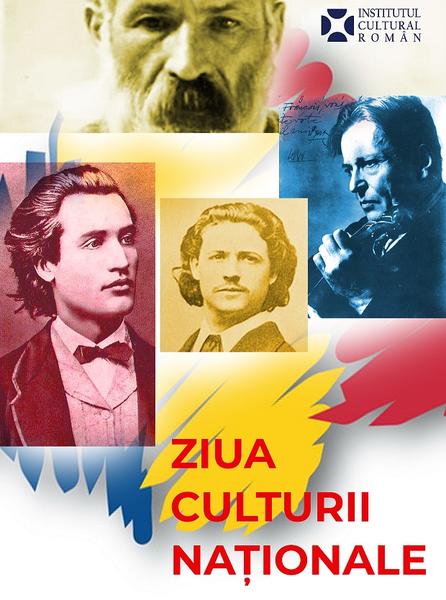
I deliberately wanted to end with Dosoftei – the one born four centuries ago in Suceava, when Moldova stretched as far as the Dniester – so that we do not forget that we have an ancient Romanian culture, that the world does not begin with us, the epigones, that, despite the detractors, the great modern literature was built on notable antecedents. But the Day of National Culture cannot be celebrated without Eminescu. We must remember that in 1889, that is 135 years ago, the child born on January 15, 1850, passed away from this ephemeral world, but only then, on June 15, 1889, his eternal life began, because he is the greatest spirit that the Romanian people has ever born. If Eminescu (along with other classics such as Alecsandri, Creanga, Caragiale, Slavici or Coșbuc) is not known and appreciated in the world as he should be, and if foreign countries have a different hierarchy of Romanian intellectual values than we have in the country and in the Republic of Moldova, it is not Eminescu’s fault, but ours. And, perhaps, of the unfair world in which we live and in which the criteria of value are crooked.
Eminescu had an extraordinary capacity for assimilation and a power of judgement of depths untouched by others. He lived in the era of the rise of the national state edifice, but he was harshly critical of contemporary society. In 1884 (140 years ago), receiving royalties for poems sent to the “Family” in Oradea, he wrote to Iosif Vulcan: “Dear Sir and friend, thank you for the honorarium sent – the first for literary works I have ever received in my life. In Romania demagogy reigns, in politics and in literature; just as the honest man here remains unknown in public life, so true talent is drowned by the evil weed of mediocrity, of that school which thinks it can replace talent by impertinence and mutual admiration. […] I assure you that it was a rare comfort for me to see myself remunerated from such a distant corner of Romania, from Oradea-Mare …”. Eminescu was deeply disappointed by Romanian public life, but he lived the idea of union and saw Romania as if it already existed. Decades before 1918, he placed Oradea in Romania and rejoiced in the “great future” of his country.
Eminescu was a visionary, he created in the spirit of his people, but he also knew the harmony of the peoples of the world. He did not write for a particular place and time, but for the endless. That is why the day of the birth of the child frolicking on the hills of Ipotești is the happy day of the destiny of this people, wisely proclaimed, in the two Romanian states and in the souls of Romanians everywhere, as the Day of National Culture.”