
The Holy Pious Filofteia and Elisabeta of Pasărea – monks who were devoted to prayer, merciful, and miracle-workers
Pasărea Monastery, a center of Hesychast monastic life founded by the monks of Cernica Monastery, has, over the centuries, produced luminous figures of monastics who, through their pure way of life, have become pillars of prayer and intercessors before God. Among these spiritual flowers of the Pasărea community, two stand out in particular, separated by nearly two centuries but united by the same desire for a virtuous life: the Holy Pious Filofteia, the mother of Saint Calinic of Cernica, who passed away in 1833, and Saint Elizabeth, a nun who lived as a hermit in the Giumalău Mountains of Bukovina and was called to her heavenly home in 2014 at the age of 44. Although the lives of the two nuns unfolded in very different times and circumstances—one raising her children in a nobleman’s house in Bucharest, in the St. Visarion neighborhood, and the other enduring abject poverty in a village in Bukovina and then the harshness of the hermit’s life in the mountains, both were ordained by divine providence to have their final act of reverence and the place of their passing to the Lord at Pasărea Monastery, finding fulfillment in their monastic labors. Looking at their lives in the light of the three great gifts that adorned them—the ceaseless work of prayer, humble and generous love for their neighbor, and the charism of miracle-working—we joyfully discover how, in various ways, God worked in the souls of these nuns, leading them through their ascetic efforts to the measure of holiness.
1. The Work of Unceasing Prayer
For these two holy nuns, prayer was the very lifeblood of the soul, the natural breath they had learned from childhood and which they practiced until the very last hour of their lives. Saint Philothea, known in the world as Floarea, learned to pray in her parents’ home. Likewise, the little girl Rodica—who would later become the nun Elisabeta—learned her first prayers while kneeling alongside her eight brothers in the modest home of the Lazăr family in Moldova-Sulița, where their mother Maria had all the children ask God for health, bread, and growth in wisdom. These humble beginnings of prayer, practiced in the homes of simple people, were true seeds sown by mothers in their children’s souls—seeds that would later bear fruit in the lives of these two holy women.
Both nuns lived the communal monastic life under spiritual guidance, thereby deepening their prayer through obedience to their spiritual fathers. Saint Philothea, having been widowed, followed the advice of her son, Saint Calinic, and entered the community of the Pasărea Hermitage at that time, a settlement under the spiritual guidance of Cernica Monastery. Saint Elizabeth, when she was sixteen years old, went on a pilgrimage to the holy monasteries, receiving the advice and blessing of the Holy Pious Fathers Paisie and Cleopa from Sihăstria Monastery, as well as from Father Ambrozie Dogaru of the same monastery and Father Arsenie Papacioc of Techirghiol Monastery. Thus, she came to live at Pasărea Monastery, under the guidance of Archimandrite Macarie Ioniță. Thus, the two holy and devout nuns found themselves within the same tradition of spiritual discipleship, growing in monastic life under the guidance of ascetic and prayerful spiritual fathers.
The fruit of this spiritual obedience was, for both nuns, the attainment of unceasing prayer. We know that Saint Philothea had a contemplative and devout nature, which she also instilled in the hearts of her children. Saint Elizabeth, in the wilderness, fulfilled with great zeal the apostolic commandment of unceasing prayer (cf. 1 Thessalonians 5:17). The disciples who observed her report that she read the Psalter every night, knew the Paraclis and the Akathist Hymn to the Mother of God by heart, and as she walked along the forest paths, she would whisper the Jesus Prayer without ceasing, demonstrating that true prayer requires a pure heart that loves Christ above all else.
2. Humble and Generous Love for Those Around Her—A Living Icon of God’s Merciful Love
If prayer had been rooted in their souls since childhood, self-sacrificing love for their neighbor was its fruit, which they offered to all people. Saint Philothea devoted her life to her family, receiving four children from God, whom she raised in the light of the Holy Scriptures. Saint Elizabeth, the third of the eleven children in the Lazarus family, bore the burden of caring for her siblings from a young age. She lived in poverty, working for her family and walking five or six kilometers to school without food or money for the trip, collecting bottles for recycling to buy a few cookies that she shared with her brothers and sisters.
Thus, God shows us that self-sacrificing or merciful love does not prioritize one calling over another; the sacrifice of a mother who raises her children to holiness is worthy of honor, and so is the sacrifice of an older sister who helps the younger ones grow up well.
The sincere and generous love of these two pious nuns was also evident in their humble demeanor, which sought nothing for themselves but only the good of those around them. The two holy nuns lived in utter simplicity. From their chosen poverty, they shared what they had with those around them, showing their merciful love. The words of Scripture, “It is more blessed to give than to receive” (Acts 20:35) was brilliantly fulfilled in the lives of these two pious nuns, who, though they had so little, strove to give to those around them, their charity consisting of spiritual counsel and remembering people in their holy prayers.
The end of their earthly lives clearly showed us the extent of their self-sacrificing love, as both continued to be merciful until their very last breath. Saint Philothea passed away, leaving behind her spiritual work, which bore fruit in the hearts of her contemporaries. Saint Elizabeth, in the final years of her life, suffering terribly from a recurrence of cancer, welcomed with the same love all those who came to her sickbed, concealing her pain and sharing with them soul-building counsel. Thus, the deeds of these two pious nuns show us that authentic Christian life is, without a doubt, a ceaseless self-denial that, over time, becomes a spring of spiritual life for the benefit of others. And it was precisely this willingness to give of themselves that made them, through the grace of the Holy Spirit, chosen vessels through whom many miracles were performed.
3. The Gift of Working Miracles
God, glorified in His saints, was pleased to crown the ascetic struggles and humility of these two holy women with the gift of working miracles. Saint Philothea proved to be a swift helper, healing a woman who had been in cardiac arrest for six to seven minutes, and later a young woman who had suffered burns was healed, leaving her without any lasting effects. As for Saint Elizabeth, even during the years she spent in the Giumalău Mountains, it was evident that she had received from God the gift of performing miracles: wild animals were tamed in her presence, deer came to receive food from her hand, and little birds perched on her palm. Saint Elizabeth performed miracles both during her earthly life and after her passing to her heavenly home. While Saint Elizabeth was traveling by train, there was a man in her compartment who was tormented by an unclean spirit; he was shouting at the saint. When she gently touched him with a wooden cross that had been touched by the Holy Sepulcher, the man collapsed as if dead, and after Saint Elizabeth marked him three times with the sign of the Holy Cross, he came to his senses, kissed the pious woman’s hand, and thanked her for casting out the evil spirit that had tormented him for so long. Saint Elizabeth’s gift of foresight often manifested itself: the saint knew who was coming along the forest path and why; she knew when a brother had gotten lost in the mountains and sent people to search for him; she sensed from afar the suffering of those she knew and reached out to them through the forest rangers’ phones or through letters that arrived just when they needed her advice the most. There are many instances in which Saint Elizabeth proved herself a healer of illnesses through her prayers. All the miracles performed by the Holy Pious Women Philothea and Elizabeth of Pasărea reveal God’s work in the lives of these great intercessors, who proved to be mediators before the Most Holy Trinity on behalf of the helpless.
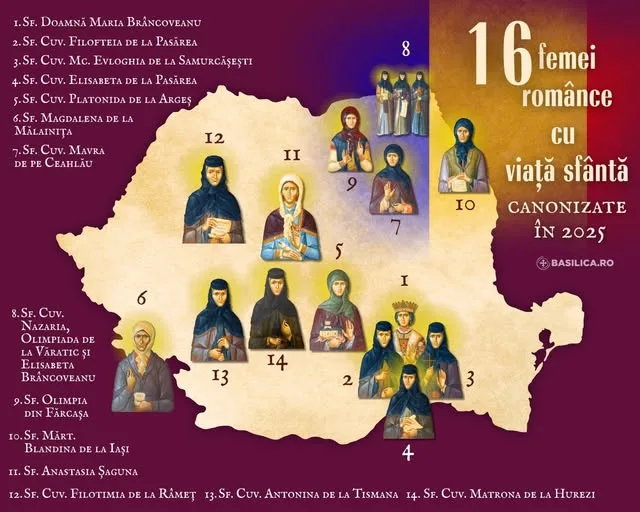
The canonization of the Holy Pious Women Philothea and Elizabeth of Pasărea, along with the other 14 Romanian holy women, reveals God’s blessed work among the Romanian people. From among them arose these 16 holy women, spiritual mothers of the Romanian people, who, through their holy lives, have become living examples of Christian living and guides to Christ for all believers.
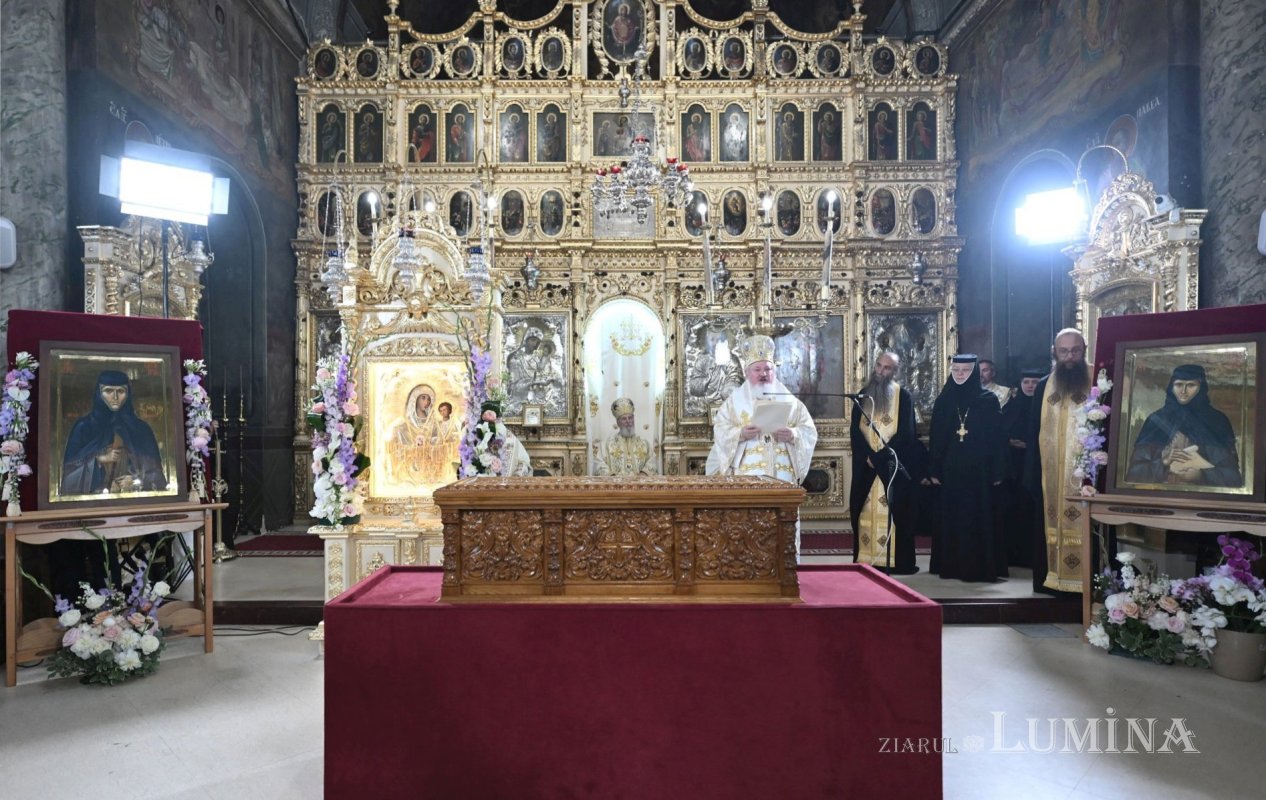
Today, on this blessed occasion of the local proclamation of the canonization of the Holy Pious Women Philothea and Elizabeth of Pasărea, we wish to express our appreciation and esteem for the hierarchs, clergy, and faithful who, with great love, have come to honor these great ascetics and intercessors before God.
We pray to the Holy Pious Women Philothea and Elizabeth of Pasărea that, together with the Most Holy Mother of God and all the saints, they may intercede before the Most Holy Trinity to grant everyone peace and joy, health, and salvation.
source:ziarullumina.ro