[:en]
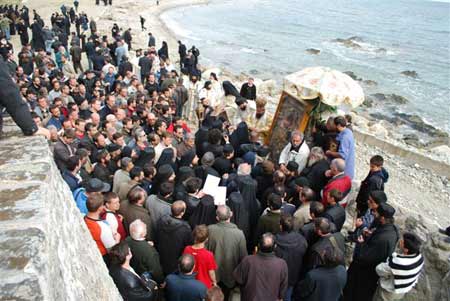
After the Mother of God searched us through the myrrh streaming icon of Hawaii, in February 2018, and through the icon of Portaitissa from the Iviron Monastery in Mount Athos, in September 2019, Virgin Mary was permanently remained at Saint John the Evangelist Church in Toronto, on Sunday, December 15, 2019, through its miraculous icon Portaitissa, from the Athonite Iviron.
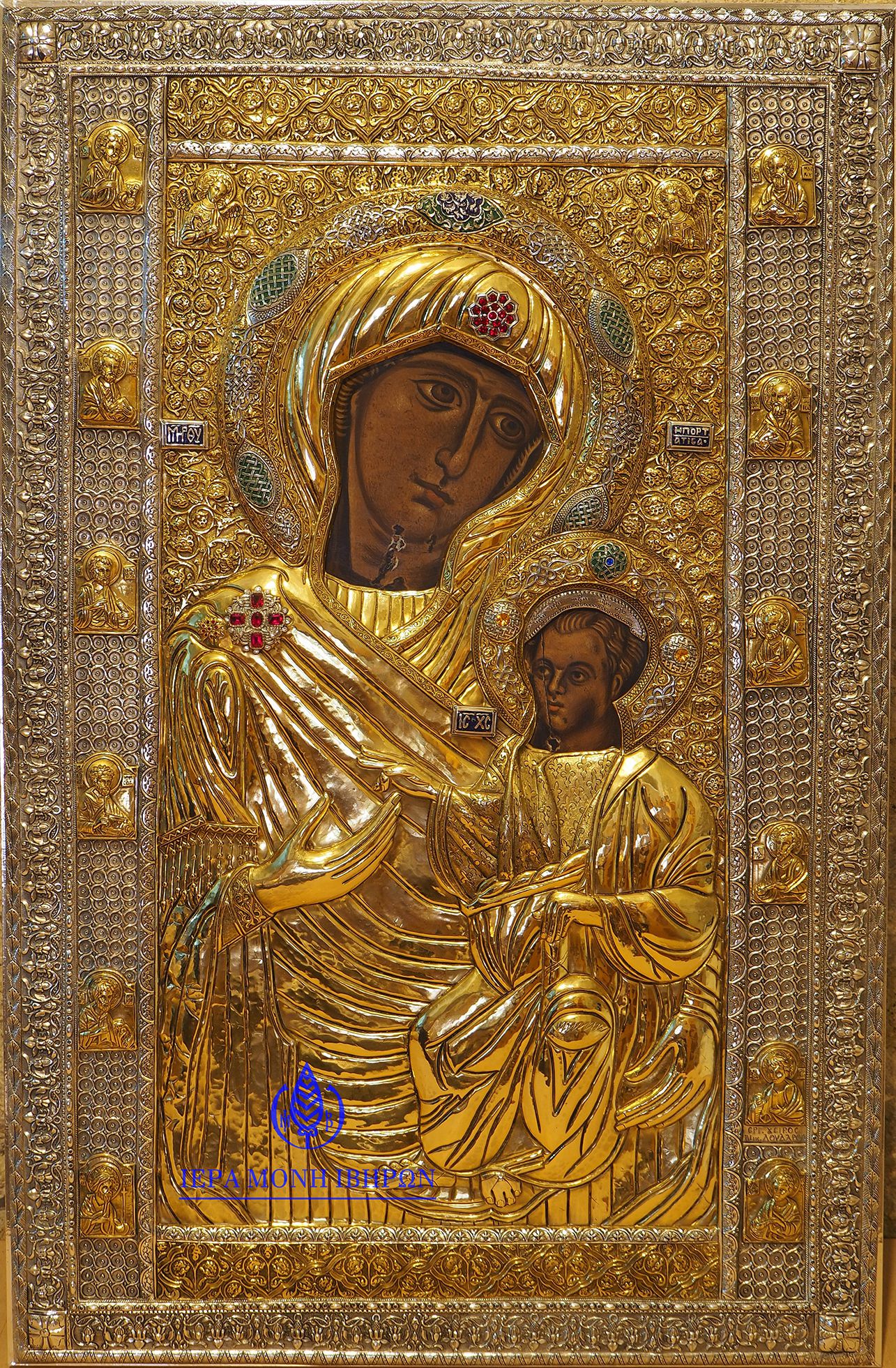
The icon of the Virgin Mary from the Iviron Monastery, known worldwide under the name of “Portaitissa”, is the most beloved and honest icon in the Holy Mount Athos. The icon of the Virgin Mary Portaitissa is in the small chapel, on the left, as soon as it enters the yard.
The Iviron Monastery is located in the northeastern part of Mount Athos, on the shores of the Aegean Sea, and was built by the Georgian kings until 972, when the documents already mention it. Monastery built by Georgians (iviriti), Iviron is today under the leadership of the Greeks. The great church of the monastery is dedicated to the Assumption of the Virgin.
The monastery will be destroyed by French pirates, in 1259, and then again, at the command of the Byzantine emperor Michael VIII the Paleologist, because the inhabitants here were opposed to the union with the West. The last destruction of the monastery took place in the fourteenth century, when the Catalans ransacked the place. Iviron Monastery is the third in the Athonite hierarchy, after the Sea Lavra and Vatoped monasteries.
The godly rulers of the Romanian Country essentially supported the life of the Iviron Monastery, among them, the documents commemorating Neagoe Basarb, Radu Mihnea and Matei Basarab. The ruler Serban Cantacuzino is the one who founded, in 1680, the paraclis where the most precious scent of the monastery is preserved, namely the icon of the Virgin Mary Portaitissa.
Icon of the Virgin Mary from the Iviron Monastery – “Portaitissa”
The miraculous icon of the Mother of God, called “Portaitissa”, is in the chapel at the gate of the Iviron Monastery, as you enter the courtyard, on the left side. According to the Athonite tradition, this icon came alone, by sea, from Byzantium – Niceea.
It is said that at the time of the persecution of the icons – the iconoclasm – he lived in Niceea of Asia Little a faithful widow, who had only one son. She kept this icon of the Virgin Mary in her house with great godliness. At a check made by the emperor’s envoys, they found the icon and said threateningly to the widow: “Give us money to get rid of your icon, otherwise we will fulfill the commandments!”. Then the woman gave them a lot of money, to give her a break until the next day.
At night she took her son and the icon and they went to shore. The woman removed the icon from the house and went with her to the seashore and said, “Mother of the Lord, I can no longer appear to you. Master of the world, you, as the Mother of God, have dominion over the whole building. You can you also rescue us from the anger of the masters and your icon of the deep sea”, and put it on the water. And the icon came, wonderfully – right, on the water, without sinking – to the Mount Athos.
The widow was caressed by this sight and thanked the Most High and her son said, “My child, our desire for the Mother of God is already fulfilled. I am ready to die for my faith, through the hands of the tyrants, if I have to, but I do not wish for your death either. Please and I beg you to go to the parts of Greece. “
The son listened to her and left for Thessalonica, then went on to the Holy Mount Athos, in that place where, after a few years, the Iviron Monastery was erected. There he became a monk, and after living in God’s favor, he moved to the eternal. Mountain the history of the icon that, along with his mother, had thrown into the sea.
After years and years, when near the Saint Iviron Monastery was built, the monks saw in a night above the waves a pillar of fire that reached to the sky. In front of the views out of the ordinary, they remained motionless and sang. The vision continued for several nights, until monks from other monasteries gathered there on the shore. Then they saw that pillar of fire spring from an icon of the Virgin Mary, and when the parents wanted to approach the boat, the icon was removed. They returned to the monastery church and prayed with faith and tears to the icon of their monastery.
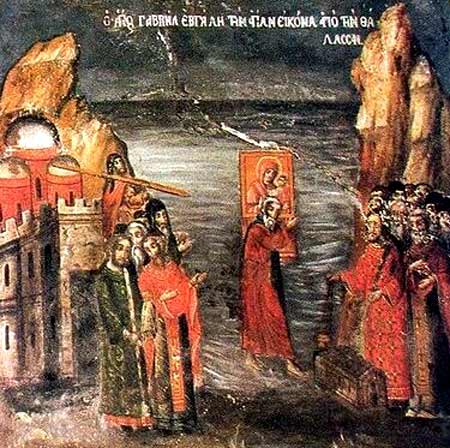
There was then in the Iviron Monastery a hieromonah by the name of Gavriil, who in the summer months lived a little above the monastery, in need and harsh posture, like an earthly angel. He was shown the Most Holy Birth of God and told Him
“Tell the abbot and brothers that I want to give them my icon to cover and help them, then go into the sea and ride on the waves, and then they will all know my goodwill towards the monastery.”
Then all the monks came to the shore where Gavriil walked on the sea as on land and he was entrusted to take in his hands this heavy and large icon, painted on wood. On the shore, the monks worshiped the icon with godliness and great joy. Then with scales they took her to the holy altar of the monastery church.
The next day, however, the icon was not found in the church! Looking for it, they found it on the monastery wall, above the central gate. They brought her to the church, but again they found her at the gate. This unusual thing happened several times, until the confusion of the monks was unleashed by the Most Holy, who appeared in a dream to the egumenabboture, and to hope in the mercy of my Son and Master of all living monks with godliness and fear of God in this virtuous mountain. but I have asked of him, and behold, I give you a sign: as long as you see my icon in this monastery, the grace and mercy of God will not fail you. “
The monks enjoyed all this and then built a chapel near the monastery gate, where they placed this miracle icon, which is in this place until today. Due to this happening, the icon was given the name “Portaitissa”.
The icon is a large one, it is 1.30 x 1.90 meters. The icon is enchanted, except for the girls, with gold and silver clothing, with precious stones, gold coins and many other ornaments given by emperors, kings, abbots, dukes, officers and simple believers. These gifts are evidence of the wonders of the Presidency. They offered to the Virgin Mary those who received what they asked for from her.
It was prophesied, by the parents, that at the end of the world, this icon will go to sea, as it came. Also, it is said that when the woman enters the Holy Mountain, the icon will leave the monastery, nobody knowing where to take it.
Icon of the Virgin Mary from the Iviron Monastery – Portaitissa – miracles
One of the joys that this icon of the prayers has made is the following: a young pilgrim, not receiving bread from the cook, received from the Mother of the Lord a yellow, to give to the cook. The cook, realizing where the yellow was, fell down.
As for the bread in the monastery, another miracle happened here: when the monastery did not dine at the feast, for fear of hunger, because they did not have enough supplies, then millions of ants began to eat the wheat from the barn. In remembrance of this miracle, repenting before God, the monks took their canon of love to put daily, at the door of the monastery, a wooden crate, with bread, available to all pilgrims crossing the threshold.
The oil from the candle of this holy icon is the cure for the poison
The icon depicts a wound healed by the chin, stemming from a spell hit by a pirate, when Arabs came to the Holy Mountain. An Arab soldier hit the knife in the face of this icon, and blood began to flow. The Arab seeing the miracle, became frightened and fell to the ground, repented, baptized in the Christian law and dressed in the monastic robe, remaining there until death. Not wanting to receive a monk’s name, he asked for the deed to be named Varvar – Barbarian. After that he led a holy life, for which he was recognized as a saint. In the church is painted on the wall St. Varvar, with pirate clothing.
In 1651, the Mother of the Lord Portaitissa will cure the daughter of the Tsar Alexei Mihailovici of Russia. The girl was paralyzed and had no chance of doctors. In the dream, the girl appeared to the Mother of the Lord Portaitissa, who told her to worship her icon. The Czar asked the Ecumenical Patriarchate for an icon from Iviron. The monks painted a faithful copy of the icon and gave it to the Czar. This icon, the copy, was brought before the paralyzed girl who, by worshiping her, was healed.
Akathist to the Mother of God Portaitissa
Read first the beginning prayers, and then:
Kontakion 1
O chosen Champion, Our Lady the Mother of God, we thy servants bring thee a song of praise, bearing as it were thine honoured image in procession like a mighty shield, an unbreakable wall, an unsleeping guard; and thou, as thou hast invincible power, cover and protect us, Lady, from all our enemies seen and unseen, and deliver us from all harm to body or soul, who cry to thee: Rejoice, blessed Lady of the Portal, opening the gate of Paradise to the faithful!
Ikos 1
The leader of the angels was sent to speak to the Mother of God, that her apostolic service might fall upon the land of Iviron: Separate not thyself from Jerusalem, for it is thy lot to enlighten her in the last days; for God hath laid it upon thee to work for the world: wherefore we cry to thee:
Rejoice, by whom the Gospel is spread abroad.
Rejoice, by whom the lure of idols is made vain.
Rejoice, by whom the power of the Prince of Darkness is broken.
Rejoice, by whom the Kingdom of Christ is confirmed.
Rejoice, recalling to the light of the Gospel those sunken in darkness.
Rejoice, leading us from the slavery of the Devil into the glorious liberty of the children of God.
Rejoice, ready handmaid of thy Son and God.
Rejoice, by thy obedience atoning for the disobedience of Eve.
Rejoice, height of beneficence.
Rejoice, depth of humility.
Rejoice, by whom the unbelieving come to know the Creator.
Rejoice, by whom the faithful are adopted as sons by the Father.
Rejoice, blessed Lady of the Portal, opening the gate of Paradise to the faithful!
Kontakion 2
The Holy Virgin seeing the wonderful new plan of God, as his handmaid was as ever ready to carry it out, crying: Alleluia.
Ikos 2
The mysterious meaning of the Angel’s word was clear to thee, Purest One, and in obedience to it thou didst wend thy way to Mount Athos, to spread the Gospel, as the lot fell to thee. And we joyfully sing to thee:
Rejoice, illuminating Athos with thy coming.
Rejoice, dispersing the darkness of idols.
Rejoice, planting there the true faith.
Rejoice, driving out unbelief.
Rejoice, taking this Mountain into thy care.
Rejoice, promising grace to this place.
Rejoice, bestowing earthly joy on the faithful dwellers therein.
Rejoice, assuring them of eternal salvation.
Rejoice, fervent intercessor for those in thy care.
Rejoice, destroyer of all their foes.
Rejoice, promising thy Son’ s mercy to this place till the end of time.
Rejoice, foretelling that his grace should never leave it.
Rejoice, blessed Lady of the Portal, opening the gate of Paradise to the faithful!
Kontakion 3
At the intercession of the Mother of God, the power of the Most High overshadowed the holy mountain, and its glens and thickets appeared as a great harvest-field full of religious eager to reap their salvation, as they sang to her: Alleluia.
Ikos 3
Having in mind the lot of the people of the land of Iviron, thou didst settle thyself in their midst, even upon Mount Athos, to them all a shelter, a quiet harbour of salvation to them, giving them thy icon as a shield and guard, and all cried out:
Rejoice, glorious preacher of the Gospel in the land of Iviron.
Rejoice, turning this land from the lure of idols to the light of Christ.
Rejoice, branch of the deathless Vine, giving wondrous grapes.
Rejoice, bearing branches of miracle-grapes and the blessings of faith.
Rejoice, who hast planted a spritiual garden on Athos.
Rejoice, watering the land of Iviron with the stream of spiritual enlightenment flowing therefrom.
Rejoice, fair speech from lips of gold.
Rejoice, unshakable tower of the fortress.
Rejoice, strength of honourable Tsars.
Rejoice, protecting wall of monks.
Rejoice, quiet harbour for those who seek salvation.
Rejoice, preparing for them an endless rest.
Rejoice, blessed Lady of the Portal, opening the gate of Paradise to the faithful!
Kontakion 4
The noble widow was tossed by a storm of inward doubts, when in Nicea, perplexed, she saw the sacrilegious warrior pierce with his spear the face of the holy and honoured icon of the Mother of God, and blood issuing from it; seized with fear lest the holy icon be defaced, with prayers and tears she flung it into the sea. But seeing it on the surface of the water making its way towards the west, she cried joyfully: Alleluia.
Ikos 4
When the monks of the holy mountain saw it proceeding over the sea like a burning flame, even a pillar of fire, lighting up the heavens like the shining sun, and in the night drawing near to the shore; and knowing it for the holy icon of the Mother of God, borne on the waves by a supernatural power, they cried to the Blessed One:
Rejoice, Burning Bush, foreseen by those who kept the law.
Rejoice, pillar of fire, enlightening those who sit in darkness.
Rejoice, stairway leading up to Heaven, whereby God came down.
Rejoice, bridge leading creatures from earth to Heaven.
Rejoice, dawn of the mysterious day.
Rejoice, star that brought forth the sun.
Rejoice, who gavest birth to the light that is beyond words.
Rejoice, who hast taught no one how it was done.
Rejoice, clothed with the sun, radiant with grace and glory.
Rejoice, lightning, illuminating souls, lighting up faithful minds.
Rejoice, radiance shining in darkness.
Rejoice, bringing forth the many splendid glory.
Rejoice, blessed Lady of the Portal, opening the gate of Paradise to the faithful!
Kontakion 5
Wishing to give thy God-sent icon to the dwellers in Iviron, thou didst speak, Mother of God, to the Elder Gabriel: „Go down with the choir of monks to the seashore, enter the water and bring up my icon;” and he, filled with faith and love, walked over the water as if on dry land, took it in his bosom, and they, receiving the treasure, all unworthy of it, to be their own icon of Iviron, joyfully sang: Alleluia.
Ikos 5
The monks of Iviron, seeing the icon of the Mother of God many times rise out of its shrine and fly up the wall above the monastery gate, borne by an invisible force, were terrified, and standing cried to her thus:
Rejoice, deigning to bestow on us thy holy icon.
Rejoice, promising us to be our defence.
Rejoice, showing thy love to our hermitage.
Rejoice, showing thy beneficient plan for us.
Rejoice, our help in strange lands.
Rejoice, our comfort on pilgrimages.
Rejoice, God’s goodness to us.
Rejoice, our boldness to God.
Rejoice, who dost dry our tears.
Rejoice, protectress of us orphans.
Rejoice, our defender.
Rejoice, our only joy.
Rejoice, blessed Lady of the Portal, opening the gate of Paradise to the faithful!
Kontakion 6
When the elder Gabriel had done thy will, thou saidst to him, O Lady: „I have not come to be preserved by you, but to be your preserver, both in this world and the world to come. Behold, I give you a sign: as long as you see my icon in this monastery, my Son’s mercy will not be withdrawn from you, who all cry to him: Alleluia.”
Ikos 6
The monks, beaming with joy on hearing thy great promise, Mother of God, raised a shrine above the gate of the monastery to the heavenly Lady of the Portal, joyfully crying out thus:
Rejoice, our protectress in this life.
Rejoice, our leader into the next.
Rejoice, teaching us the fear of God.
Rejoice, setting us in the way of good works.
Rejoice, our boldness and our hope.
Rejoice, our confidence and protection.
Rejoice, inclining to us the Son, the fruit of thy womb.
Rejoice, giving us good news of his inalienable grace among us.
Rejoice, giving thy holy icon to us as a pledge of mercy.
Rejoice, giving with it miraculous gifts.
Rejoice, turning away all threat of evil from our retreat.
Rejoice, giving all a safe going-out.
Rejoice, blessed Lady of the Portal, opening the gate of Paradise to the faithful!
Kontakion 7
One day the wicked Amir thought to destroy the Iverskaya hermitage, and scatter the flock of monks gathered there; but soon after he learned that the Mother of God was their strong defence, as he saw his ships flounder in the depths of the sea, and his warriors destroyed; whereupon he humbly brought silver and gold to the hermitage, asking their prayers. The monks, seeing this, cried to God: Alleluia.
Ikos 7
And new and countless miracles wrought the Mother of God, filling the hermitage with wine, flour and oil, healing those possessed of devils, making the lame to go, the blind to see, and curing all ills, and those who saw these marvels sang to thee:
Rejoice, chosen Champion, conquering the enemies of all.
Rejoice, swift help of all who cry to thee.
Rejoice, who dost not despise our prayers.
Rejoice, who goest not back on thy word.
Rejoice, turning the grief of the hermitage into joy.
Rejoice, turning the dearth of the hermitage into abundance.
Rejoice, sight of the blind.
Rejoice, going of the lame.
Rejoice, healer of all the sick.
Rejoice, comfort of all the unhappy.
Rejoice, who never ceasest to plan for us and save us.
Rejoice, delivering us from a troubled mind.
Rejoice, blessed Lady of the Portal, opening the gate of Paradise to the faithful!
Kontakion 8
The Patriarch Nikon, hearing of the wonderful protection given by the icon of the Mother of God to the monastery of Iviron, would fain have the land of Russia share in her grace; wherefore he set up a monastery in honour of the glorious image, respectfully soliciting a copy of the wonderworking icon of the Mother of God, that those who enjoyed her protection might cry to God: Alleluia.
Ikos 8
Ever dwelling on high, but not forsaking the lowly, thou deignedst, Mother of God, to give the new monastery in the land of Russia thy blessing, even as of old to ancient Antony on Mount Athos when he established his holy cave-dwelling; even the blessing wherewith thou didst bless Athos, in honour of thy revered image. Wherefore we cry to thee:
Rejoice, protectress of the land of Russia, broader than a cloud.
Rejoice, defence and strengthening of the Orthodox faith.
Rejoice, unshakable pillar of the Orthodox Church.
Rejoice, who castest down heresy and schism.
Rejoice, icon that lightest up all the land with bright and wonderworking rays.
Rejoice, from whom flow gifts of healing and mercy.
Rejoice, strength of the sceptre of the Tsars.
Rejoice, terror of foes.
Rejoice, joy of the Saints.
Rejoice, praise of the priests.
Rejoice, patroness of monks.
Rejoice, salvation of all our race.
Rejoice, blessed Lady of the Portal, opening the gate of Paradise to the faithful!
Kontakion 9
With all reverence for the copy of the honoured image of the merciful Lady of the Portal, the host of mortified monks of Iviron finished their prayers and hymns and washed with holy water the board on which the honoured image was to be portrayed; and they consecrated the Elder Lamblichus for the work; who in fasting, prayer and vigil with all the brethren, using only holy water and blessed relics executed the noble likeness of the Mother of God, praying and crying to God: Alleluia.
Ikos 9
We see wise men silent as fish on account of thee, Mother of God; for they cannot tell how fitly to sing of thy wondrous works, done for our race through thy holy icon; for on the way to Russia, commanding the noble Manuel to give ransom to the infidels who were obstructing the progress of the holy icon into the land of Russia, thou rewardest him twofold thereafter. And we, marvelling, faithfully sing to thee:
Rejoice, inexhaustible fountain of marvels.
Rejoice, giver of all mercies.
Rejoice, ever fervent intercessor for us with God.
Rejoice, treasure of his providence.
Rejoice, refuge of those in distress.
Rejoice, comfort of the afflicted.
Rejoice, health of the sick.
Rejoice, strength of the infirm.
Rejoice, comforter of widows.
Rejoice, gentle mother of orphans.
Rejoice, guide of those who stray from the way of truth.
Rejoice, leader of sinners to repentance.
Rejoice, blessed Lady of the Portal, opening the gate of Paradise to the faithful!
Kontakion 10
Wishing to save many times from grief and misery, thou pourest forth from thy icon an unending stream of mercies on our race, Mother of God. Wherefore, blessed Lady of the Portal, in the royal city of Moscow thou didst show thyself to all who bow down to thee, giving ready help and pouring forth streams of light from thy icon in the new Iverskaya shrine; and on other cities, monasteries and all who honour thee, fulfilling thy kindly promise. Wherefore, glorifying God, who gave us so much grace, we sing to him: Alleluia.
Ikos 10
Thou art, a wall of defence to monks, O Mother of God, and to all who take refuge with thee; for the Creator of Heaven and earth dwelt in thy virgin womb, and taught all who long for purity and chastity to cry to thee:
Rejoice, chosen vessel of virginity.
Rejoice, purest image of chastity.
Rejoice, womb of seedless conception.
Rejoice, Bride ever virgin.
Rejoice, who didst bear the Sower of Purity.
Rejoice, who dost unite the faithful to the Lord.
Rejoice, swift help in the storms of temptation.
Rejoice, destroyer of the enemy’s snares.
Rejoice, who sweepest away the dark passions that destroy the soul.
Rejoice, who dost purify the mind.
Rejoice, who teachest us to despise the temptations of the world.
Rejoice, directing mind and heart to Heaven.
Rejoice, blessed Lady of the Portal, opening the gate of Paradise to the faithful!
Kontakion 11
All songs must fail that try to encompass the magnitude of thy mercies; if we brought thee as many songs as the sands of the sea, Our Lady, Mother of God, we should do nothing worthy of what thou hast given to us, who sing to thee: Alleluia.
Ikos 11
We see the holy icon of the Mother of God shining in darkness like a glorious light; with its mysterious fire of grace, its miraculous rays, it illuminates all, teaching us to cry to the Blessed Lady:
Rejoice, swift help in all our need.
Rejoice, swift ear to hear in our sorrows.
Rejoice, delivering us from fire, sword and invasion by the stranger.
Rejoice, freeing us from famine and an unprovided death.
Rejoice, warding off from us poison and all deadly things.
Rejoice, sudden help to those in trouble travelling by land or sea.
Rejoice, healing of the soul’s poison and the body’s.
Rejoice, taking into thy hands those whom the doctors have given up.
Rejoice, merciful consoler of all sorrowful and burdened.
Rejoice, who wilt not thrust away the despised and the outcast.
Rejoice, snatching those in utmost despair from the brink of ruin.
Rejoice, who withholdest not thy protection and intercession from worthless me, whose good deeds are so few.
Rejoice, blessed Lady of the Portal, opening the gate of Paradise to the faithful!
Kontakion 12
Wishing to give grace and release from ancient debts to all debtors, the Redeemer of mankind came with thee to those who had departed from his grace, and tearing up the writ against them, gave us a mighty intercessor, high in God’s grace: so to her in prayer we cry: Alleluia.
Ikos 12
As we sing thy wonders shown to us in this life, we praise thee, Mother of God, as the inexhaustible fountain of mercy: but falling down before thy wonderworking icon, we humbly pray, be our protection and shield in the day of our death, and when we come to stand before the dreadful judgement seat of they Son, let us cry to thee:
Rejoice, sitting in glory by the throne of the Son; remembering us there.
Rejoice, ever reigning with thy Son and God, and interceding for us.
Rejoice, giving confidence to those who hope in thee at their life’s end.
Rejoice, making their end painless and peaceful.
Rejoice, deliverer from bitter pains.
Rejoice, deliverer from the power of the Prince of the Air.
Rejoice, who makest our sins to be forgotten.
Rejoice, God’s hope to us of bliss.
Rejoice, making a place at the right hand of thy Son for those that hope in thee.
Rejoice, enabling us to hear his blessed voice that promises us a dwelling in Heaven.
Rejoice, blessed Mother, who takest to dwell with thee all who honour thee.
Rejoice, strong hope of eternal salvation to all Christians.
Rejoice, blessed Lady of the Portal, opening the gate of Paradise to the faithful!
Kontakion 13
O most holy Lady, Virgin, Mother of God, Mother whose praise all sing look down upon us humbly with tears bringing our little prayers before thy most pure image, putting all our trust and hope in thee, and deliver us from all ills and disasters in this life, and from torments in that to come, that, saved by thee, we may sing: Alleluia! Alleluia! Alleluia! (Three times)
Repeat Ikos 1 and Kontakion 1[:ro]
După cercetarea Maicii Domnului prin icoana izvorâtoare de mir din Hawaii, în februarie 2018, și prin icoana Portărița de la Mănăstirea Iviron din Muntele Athos, în septembrie 2019, Fecioara Maria s-a sălășluit permanent la biserica Sfântul Ioan Evanghelistul din Toronto duminică, 15 decembrie 2019, prin icoana sa făcătoare de minuni Portărița, de la Ivironul athonit.
Icoana Maicii Domnului de la Manastirea Iviron, cunoscuta in toata lumea sub denumirea de „Portarita”, este cea mai iubita si cinstita icoana din Sfantul Munte Athos. Icoana Maicii Domnului Portarita se afla in paraclisul cel mic, din partea stanga, imediat ce se intra in curte.
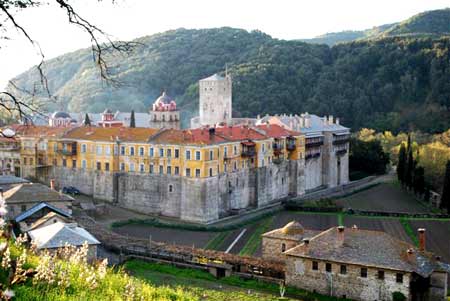
Manastirea Iviron se afla in partea de nord-est a Sfantului Munte Athos, la tarmul Marii Egee, ea fiind zidita de regii georgieni pana in anul 972, cand documentele deja o pomenesc. Manastire zidita de georgieni (iviriti), Ivironul se afla astazi sub conducerea grecilor. Biserica cea mare a manastirii se afla inchinata Adormirii Maicii Domnului.
Manastirea va fi distrusa de piratii francezi, in anul 1259, iar mai apoi din nou, la porunca imparatului bizantin Mihail al VIII-lea Paleologul, pentru ca vietuitorii de aici se impotrivisera unirii cu apusenii. Ultima distrugere a manastirii a avut loc in secolul al XIV-lea, cand catalanii au pangarit locul. Manastirea Iviron este a treia in ierarhia athonita, dupa manastirile Marea Lavra si Vatoped.
Domnii evlaviosi ai Tarii Romanesti au sustinut esential viata Manastirii Iviron, dintre ei, documentele facand pomenire de Neagoe Basarb, Radu Mihnea si Matei Basarab. Domnitorul Serban Cantacuzino este cel ce a ctitorit, la anul 1680, paraclisul unde se pastreaza cel mai de pret odor al manastirii, anume icoana Maicii Domnului Portarita.
Icoana Maicii Domnului de la Manastirea Iviron – Portarita – „Portaitissa”
Icoana Maicii Domnulu facatoare de minuni, numita „Portarita”, se afla in paraclisul de la poarta Manastirii Iviron, cum se intra in curte, pe partea stanga. Potrivit traditiei athonite, aceasta icoana a venit singura, pe mare, din Bizant – Niceea.
.jpg)
Se spune ca in vremea prigoanei icoanelor – iconoclasmul – traia in Niceea Asiei Mici o vaduva credincioasa, ce avea un singur fiu. Ea pastra cu mare evlavie aceasta icoana a Maicii Domnului in casa sa. La un control facut de trimisii imparatului, acestia au gasit icoana si au spus amenintator vaduvei: „Da-ne bani ca sa scapi impreuna cu icoana ta, altfel vom implini poruncile!”. Atunci femeia le-a dat bani multi, sa-i dea un ragaz pana a doua zi.
Noaptea l-a luat pe fiul ei si icoana si au mers pe tarm. Femeia a scos icoana din casa si s-a dus cu ea la malul marii si i-a spus: „Maica Domnului, eu nu mai pot sa te apar. Stapana lumii, tu, ca Maica a lui Dumnezeu, ai stapanire peste toata zidirea. Tu poti sa ne izbavesti si pe noi de mania stapanitorilor si icoana ta de cufundarea in mare.”, si a pus-o pe apa. Iar icoana a venit, in chip minunat – dreapta, pe apa, fara a se scufunda – pana la Sfantul Munte Athos.
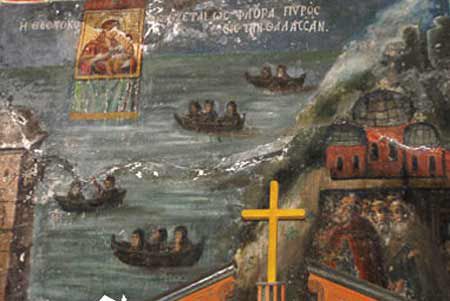
Vaduva a fost mangaiata de aceasta priveliste si i-a multumit Preacuratei, iar fiului ei i-a spus: „Copilul meu, dorinta noastra cea catre Maica Domnului este deja implinita. Eu sunt gata sa mor pentru credinta mea, prin mainile tiranilor, daca va trebui, dar nu doresc si moartea ta. Te rog si te implor sa pleci in partile Greciei.”
Fiul a ascultat-o si a plecat la Tesalonic, apoi in continuare a mers in Sfantul Munte Athos, in acel loc unde, dupa putini ani, a fost ridicata Manastirea Iviron. Acolo a devenit calugar si, dupa ce a trait in chip bineplacut lui Dumnezeu, s-a mutat la cele vesnice.” Se vede ca ajungerea lui acolo s-a facut dupa iconomia si purtarea de grija a lui Dumnezeu, deoarece de la el au aflat si pustncii Sfantului Munte istoria icoanei pe care, impreuna cu mama sa, o aruncase in mare.
.jpg)
Dupa ani si ani, cand aproape de tarm fusese construita Sfanta Manastire Iviron, calugarii au vazut intr-o seara deasupra valurilor un stalp de foc ce ajungea pana la cer. In fata privelistii iesite din comun, au ramas nemiscati si cantau. Vedenia a mai continuat cateva nopti, pana ce s-au adunat si calugari de la alte manastiri acolo, pe tarm. Atunci au vazut ca acel stalp de foc izvora dintr-o icoana a Maicii Domnului, iar cand parintii vroiau sa se apropie cu barca, icoana se indeparta. S-au intors in biserica manastirii si s-au rugat cu credinta si lacrimi Maicii Domnului sa daruiasca acea icoana manastirii lor.
Era atunci in Manastirea Iviron un ieromonah cu numele Gavriil, care in lunile de vara traia ceva mai sus de manastire, in nevointa si post aspru, asemeni unui inger pamantesc. Lui i s-a aratat Prea Sfanta Nascatoare de Dumnezeu si i-a zis: „Spune egumenului si fratilor ca voiesc sa le dau icoana mea pentru a-i acoperi si ajuta, apoi intra in mare si paseste pe valuri, si atunci vor cunoaste toti buna voire a mea catre manastire.”
Apoi toti monahii au iesit la tarm unde Gavriil a pasit pe apele marii ca pe uscat si s-a invrednicit sa ia in mainile sale aceasta icoana grea si de mari dimensiuni, pictata pe lemn. Pe tarm, monahii s-au inchinat icoanei cu evlavie si mare bucurie. Apoi cu cantari au dus-o in sfantul altar al bisericii manastirii.
.jpg)
In ziua urmatoare, insa, icoana nu a mai fost gasita in biserica! Cautand-o, au gasit-o pe zidul manastirii, deasupra portii centrale. Au adus-o in biserica, dar iarasi au gasit-o la poarta. Acest lucru neobisnuit s-a intamplat de mai multe ori, pana cand nedumerirea monahilor a fost dezlegata de Preasfanta, care i-a aparut in vis egumenului, zicandu-i: „Spune fratilor sa nu ma mai deranjeze de acum inainte, pentru ca eu nu doresc sa fiu pazita de voi, ci eu sa va pazesc pe voi, nu numai in viata de acum, ci si in cea viitoare. Si sa nadajduiasca in milostivirea Fiului meu si Stapanului tuturor toti monahii traitori cu evlavie si frica de Dumnezeu in muntele acesta virtuos. Acest dar eu l-am cerut de la El si iata, va dau voua semn: cat timp veti vedea icoana mea in aceasta manastire, harul si mila lui Dumnezeu nu vor lipsi de la voi.”
.jpg)
Monahii s-au bucurat de toate acestea si apoi au zidit un paraclis aproape de poarta manastirii, unde au pus aceasta icoana facatoare de minuni, care se afla in acest loc pana astazi. Datorita acestei intamplari, icoana a primit numele de „Portarita”.
Icoana este una de mari dimensiuni, ea avand 1,30 x 1,90 metri. Icoana este ferecata, cu exceptia fetelor, cu o imbracaminte de aur si argint, cu pietre pretioase, monezi de aur si o multime de alte podoabe daruite de imparati, regi, egumeni, duci, ofiteri si simpli credinciosi. Aceste odoare sunt dovezi ale minunilor Preacuratei. Le-au oferit Maicii Domnului aceia care au primit ceea ce au cerut de la ea.
S-a prorocit, de catre parinti, ca la sfarsitul lumii, aceasta icoana va pleca pe mare, asa cum a venit. De asemenea, se mai spune ca in momentul in care femeia va intra in Sfantul Munte, icoana va parasi manastirea, nimeni nestiind incotro o va apuca.
Icoana Maicii Domnului de la Manastirea Iviron – Portarita – minunile
.jpg)
Una dintre bucuriile pe care le-a facut aceasta icoana celor rugatori este urmatoarea: un tanar pelerinj, neprimind paine de la bucatar, a primit de la Maica Domnului un galben, spre a-l da bucatarului. Bucatarul, dandu-si seama de unde era galbenul respectiv, s-a cait.
Legat de painea din manastire, aici s-a mai petrecut inca si o alta minune: cand manastirea nu a dat masa la hram, de frica foametei, fiindca nu aveau destule provizii, atunci milioane de furnici au inceput sa care graul din hambare. In amintirea acestei minuni, pocaindu-se inaintea lui Dumnezeu, monahii si-au luat canonul dragostei de a pune zilnic, la poarta manastirii, o lada de lemn, cu paine, la indemana tuturor pelerinilor ce ii calca pragul.
Uleiul de la candela acestei sfinte icoane este leac pentru otrava
Icoana prezinta o rana vindecata la barbie, provenita dintr-o lovitura vrajmasa data de un pirat, in vremea venirii arabilor in Sfantul Munte. Un soldat arab a lovit cu cutitul in chipul acestei icoane, si indata a inceput a curge sange. Arabul vazand minunea, s-a infricosat si cazand la pamant s-a pocait, s-a botezat in legea crestineasca si s-a imbracat in haina monahiceasca, ramanand acolo pana la moarte. Nevrand sa primeasca nume calugaresc, a cerut ca pentru fapta sa sa fie numit Varvar – Barbarul. Dupa aceea a dus o viata sfanta, lucru pentru care a fost recunoscut ca sfant. In biserica este pictat pe zid Sfantul Varvar, cu imbracaminte de pirat.
In anul 1651, Maica Domnului Portarita o va vindeca pe fiica tarului Alexei Mihailovici al Rusiei. Fata paralizase si nu mai avea nici o sansa din partea doctorilor. In vis, fetei i-a aparut Maica Domnului Portarita, care i-a zis sa i se inchine icoanei sale. Tarul a cerut Patriarhiei Ecumenice icoana de la Iviron. Calugarii au zugravit o copie fidela a icoanei si au dat-o tarului. Icoana aceasta, copia, a fost adusa inaintea fetei paralizate care, inchinandu-i-se, s-a vindecat.
Acatistul Maicii Domnului Portărița
Rugăciunile începătoare, apoi:
Condacul 1:
Apărătoare Doamnă, Stăpâna noastră de Dumnezeu Născătoare, cântări de laudă aducem ţie noi robii tăi, cei ce cu venirea cinstitei icoanei tale ne-am agonisit armă tare, zid nebiruit şi strajă nebiruită. Acoperă-ne şi ne apără pe noi toţi de vrăjmaşii cei văzuţi şi nevăzuţi şi de toată vătămarea sufletească şi trupească, să strigăm ţie: Bucură-te, Portăriţă bună care deschizi credincioşilor uşile Raiului!
Icosul 1:
Îngerul cel mai întâi stătător a fost trimis să zică Născătoarei de Dumnezeu, când i-au căzut ei sorţii slujirii apostoleşti în pământul Iviriei: „De Ierusalim nu te îndepărta şi nu te despărţi, iar sorţul ce ţi-a căzut ţie, se va arăta luminat în zilele cele mai de apoi, că te vei osteni în pământul întru care Dumnezeu va voi pentru tine”, pentru aceea zicem:
Bucură-te, prin care lumii se va aduce mântuirea;
Bucură-te, prin care înşelăciunea idolească se va surpa;
Bucură-te, prin care puterea stăpânitorului întunericului se va ruşina;
Bucură-te, prin care împărăţia lui Hristos se va întări;
Bucură-te, chemarea la lumina Evangheliei a celor căzuţi în întunericul slujirii idoleşti;
Bucură-te, liberarea fiilor lui Dumnezeu din robia diavolului;
Bucură-te, slujitoare a Fiului tău şi Dumnezeu;
Bucură-te, Ceea ce cu ascultarea ta, neascultarea Evei ai vindecat;
Bucură-te, înălţimea faptelor bune;
Bucură-te, adâncimea smeritei cugetări;
Bucură-te, prin care credincioşii cunosc pe Făcătorul;
Bucură-te, prin care credincioşii se fac fii ai Tatălui;
Bucură-te, Portăriţă bună, care deschizi credincioşilor uşile Raiului!
Condacul al 2-lea:
Văzând Sfânta Fecioară minunata voie a lui Dumnezeu pentru sine, ca o roabă a Domnului pururi s-a supus lucrării Lui, strigând: Aliluia!
Icosul al 2-lea:
Înţelegerea cea neînţeleasă a graiului îngerului, Domnul făcând-o înţeleasă ţie, Preacurată, a îndreptat mergerea ta către muntele Athosului, unde s-a grăit despre tine celor ce se nevoiesc întru neamul duhovnicesc. Deci noi cu bucurie strigăm către tine:
Bucură-te, ceea ce ai sfinţit Athosul cu venirea ta;
Bucură-te, ceea ce ai surpat idolii;
Bucură-te, ceea ce ai sădit acolo credinţa cea adevărată;
Bucură-te, ceea ce ai izgonit de acolo pe cei necredincioşi;
Bucură-te, ceea ce ţi-ai ales Muntele acesta gradină ţie;
Bucură-te, ceea ce ai făgăduit darul tău locului acesta;
Bucură-te, dătătoarea bunătăţilor pământeşti tuturor credincioşilor ce locuiesc pe el;
Bucură-te, chezăşuitoare a mântuirii celei veşnice;
Bucură-te, mijlocitoare caldă celor ce locuiesc în gradina ta;
Bucură-te, înfricoşarea tuturor vrăjmaşilor;
Bucură-te, ceea ce ai făgăduit mila Fiului tău locului acesta, până la sfârşitul veacurilor;
Bucură-te, ceea ce ai prevestit că darul Lui nu se va depărta de la Sfântul Munte;
Bucură-te, Portăriţă bună, care deschizi credincioşilor uşile Raiului!
Condacul al 3-lea:
Puterea Celui Preaînalt, cu apărarea Maicii lui Dumnezeu a umbrit Sfântul Munte, surpăturile şi văile lui, și ca un sălaş prea larg l-a arătat tuturor celor ce în viaţa călugărească doresc să culeagă mântuire şi să cânte: Aliluia!
Icosul al 3-lea:
Având purtare de grijă pentru grădina ta şi pentru poporul din pământul Iriviei, bine ai voit a se zidi în locul unde însăţi ai stat când ai venit la Athos, un locaş al neamului lor, ca un liman al celor ce caută mântuirea, voind a le da și icoana ta, ca toţi să zică ţie:
Bucură-te, ceea ce ai fost aleasă ocrotitoare a pământului Iviriei;
Bucură-te, că ţara aceasta s-a întors de la înşelăciunea idolească la lumina lui Hristos;
Bucură-te, odrasla mlădiţei celei neveștejite care ai odrăslit acum viaţă luminată;
Bucură-te, ceea ce ai crescut strugurii minunilor şi ai bunei credinţe;
Bucură-te, livadă duhovnicească pe Athos sădită;
Bucură-te, ceea ce ai izvorât curgere cu duhovnicească luminare pentru pământul Iviriei;
Bucură-te, gura lui Eftimie, cea cu cuvinte de aur;
Bucură-te, a lui Ioanichie cetate nebiruită;
Bucură-te, a călugărilor îngrădire;
Bucură-te, liman lin celor ce caută mântuire;
Bucură-te, ceea ce făgăduieşti acelora odihnă veşnică;
Bucură-te, Portăriţă bună, care deschizi credincioşilor uşile Raiului!
Condacul al 4-lea:
Izvor de gânduri nedumerite având întru sine cinstita văduvă cea din Niceea, s-a tulburat văzând sfânta şi prea lăudata icoană a Maicii lui Dumnezu împusă cu suliţa ostaşului celui stricător de icoane, dintru care îndată a curs sânge, iar ea de frică fiind cuprinsă, ca să nu fie batjocorită sfânta icoană, rugăciuni şi lacrimi vărsând și mergând spre apus, cu veselie a strigat: Aliluia!
Icosul al 4-lea:
Văzând călugării Sfântului Munte flacăra ce se arăta pe mare ca un stâlp de foc, a cărui înălţime ajungea până la cer şi strălucea ca un soare, au venit noaptea la malul mării și au văzut sfânta icoană a Maicii lui Dumnezeu purtându-se pe mare cu putere dumnezeiască şi au strigat celei pline de dar:
Bucură-te, rug nears văzut de legiuitorul;
Bucură-te, stâlp de foc care povăţuieşti pe cei din întuneric;
Bucură-te, scară care ajungi până la cer, pe care s-a pogorât Dumnezeu;
Bucură-te, pod care treci la cer pe cei de pe pământ;
Bucură-te, raza zilei celei de taină;
Bucură-te, ceea ce ai născut lumina cea neapusă;
Bucură-te, ceea ce n-ai învăţat pe nimeni în ce chip a fost;
Bucură-te, ceea ce eşti îmbrăcată în soare, care străluceşti cu darul şi cu slava în toată lumea;
Bucură-te, stea care arăţi soarele;
Bucură-te, fulger care luminezi sufletele şi străluceşti gândurile celor credincioşi;
Bucură-te, strălucire care luminezi pe cei din întuneric;
Bucură-te, că din tine a răsărit strălucirea cea cu multă lumină;
Bucură-te, Portăriţă bună, care deschizi credincioşilor uşile Raiului!
Condacul al 5-lea:
Voind să dai icoana ta cu dumnezeiască mergere lăcaşului Mănăstirii Ivironului, zis-ai dumnezeiască Maică arhimandritului Gavriil: „Mergi cu ceata călugărilor la malul mării, te pogoară în valurile ei şi primeşte icoana mea”. Așadar el, întraripat cu credinţă şi cu dragoste, a mers pe apă ca pe uscat, a luat icoana în braţele sale şi dobândind acea vistierie s-a bucurat zicând: Aliluia!
Icosul al 5-lea:
Văzut-au călugării din Mănăstirea Ivirului icoana Maicii lui Dumnezeu scoasă din Biserică de multe ori cu putere nevăzută, stând deasupra porţii zidului mănăstirii, şi spăimântându-se au zis unele ca acestea:
Bucură-te, ceea ce bine ai voit a ne da sfântă icoana ta;
Bucură-te, ceea ce ne-ai făgăduit-o drept acoperământ;
Bucură-te, ceea ce ai arătat dragostea ta către lăcaşul nostru;
Bucură-te, ceea ce ai arătat purtarea ta de grijă pentru el;
Bucură-te, ajutorul nostru în ţară străină;
Bucură-te, bunăvoinţa lui Dumnezeu către noi;
Bucură-te, îndrăznirea noastră către Dumnezeu;
Bucură-te, izbăvitoarea lacrimilor noastre;
Bucură-te, apărarea noastră, a celor sărmani;
Bucură-te, îngrădirea noastră;
Bucură-te, Portăriţă bună, care deschizi credincioşilor uşile Raiului!
Condacul al 6-lea:
Propovăduitor al voii tale făcând pe Gavriil, ai zis către el, stăpână: „N-am venit să fiu păzită de voi, ci ca să fiu eu păzitoarea voastră, nu numai în veacul acesta de acum ci şi în cel viitor. Iată, vă dau semn, cât veţi vedea icoana mea în mănăstire nu va lipsi de la voi darul şi mila Fiului meu, ca toţi să strige Lui: Aliluia!”
Icosul al 6-lea:
Bucurie mare s-a făcut tuturor celor ce au auzit făgăduinţele tale, Maica lui Dumnezeu, încât călugării ţi-au ridicat ţie, Portăriţei cereşti, biserică în poarta mănăstirii, strigând aşa:
Bucură-te, ocrotitoarea noastră în viața aceasta și în cea viitoare;
Bucură-te, ceea ce frica Domnului ne înveţi pe noi;
Bucură-te, ceea ce ne îndreptezi pe calea cea bună;
Bucură-te, îndrăznirea şi nădejdea noastră;
Bucură-te, nădejdea noastră şi acoperământul;
Bucură-te, ceea ce ce ai plecat către noi milostivirea Fiului tău;
Bucură-te, ceea ce ne vesteşti că darul Lui va fi cu noi;
Bucură-te, ceea ce ne-ai dat icoana ta cea sfântă ca arvună a milei Fiului tău;
Bucură-te, ceea ce i-ai dat ei darul facerii de minuni;
Bucură-te, ceea ce depărtezi de la noi tot răul;
Bucură-te, ceea ce deschizi intrarea a tot binele;
Bucură-te, Portăriţă bună, care deschizi credincioşilor uşile Raiului!
Condacul al 7-lea:
Voind răucredinciosul Amira să strice lăcaşul Mănăstirii Ivirului şi obştea de călugări ce era adunată acolo să o risipească, degrabă a cunoscut apărarea lăcaşului de către Maica lui Dumnezeu, văzând corăbiile sale înecate în adâncimea mării şi pe ostaşi pierduţi în valurile ei. Deci înfricoşându-se ei şi venind cu smerenie, au dat la mănăstire aur şi argint, cerând iertare. Iar călugării văzând acestea au cântat lui Dumnezeu: Aliluia!
Icosul al 7-lea:
Multe şi nenumărate minuni ai arătat, Maica lui Dumnezeu, plinind în mănăstire lipsa de vin, de făină şi de untdelemn, pe cei îndrăciţi vindecând, schiopilor dăruind umblare, orbilor vedere şi toată neputinţa vindecând, iar noi văzând aceste minuni îţi cântăm ţie:
Bucură-te, Apărătoare Doamnă, care biruieşti pe vrăjmaşi;
Bucură-te, cea grabnică spre ajutor celor ce te cheamă pe tine;
Bucură-te, ceea ce nu treci cu vederea rugăciunea noastră;
Bucură-te, ceea ce de la făgăduinţă nu te întorci;
Bucură-te, ceea ce întristarea întru bucurie o prefaci;
Bucură-te, ceea ce lipsa din mănăstire tu o acoperi cu îndestulare;
Bucură-te, a orbilor vedere;
Bucură-te, a șchiopilor umblare;
Bucură-te, a tuturor necăjiţilor mângâietoare;
Bucură-te, că nu încetezi a ne purta de grijă şi a ne mântui pe noi;
Bucură-te, că dintru atâtea rele ne izbăveşti pe noi;
Bucură-te, Portăriţă bună, care deschizi credincioşilor uşile Raiului!
Condacul al 8-lea:
Auzind Patriarhul Nicon de lăcaşul Mănăstirii Ivirului cel minunat, acoperit de icoana Maicii Domnului, a dorit ca şi ţara lui să aibă împărtăşire de darul ei. Pentru aceasta, zidind lăcaş în cinstea acestei preaslăvite icoane, cu osârdie a cerut închipuirea sfintei icoane cea făcătoare de minuni a Maicii lui Dumnezu, ca prin acoperământul ei să fie ocrotiți și să cânte lui Dumnezeu: Aliluia!
Icosul al 8-lea:
Cu totul întru cei de sus fiind şi de cei de jos nedespărţindu-te, bine ai voit, Maica lui Dumnezeu, să dăruieşti aceeaşi binecuvântare de la Athos şi peste lăcaşul Mănăstirii Pecersca și peste robul tău Antonie, cu asemănarea cinstitului tău chip prin care ai binecuvântat și Sfântul Munte. Pentru aceasta strigăm ție:
Bucură-te, acoperământul cel mai lat decât norul;
Bucură-te, îngrădirea şi întărirea drept credincioşilor;
Bucură-te, stâlp nemişcat al Bisericii dreptmăritoare;
Bucură-te, înfruntarea eresurilor şi a dezbinărilor;
Bucură-te, ceea ce mulţimea credincioşilor o luminezi cu strălucitoarele raze ale icoanei tale cea făcătoare de minuni;
Bucură-te, ceea ce izvorăşti din ea darurile vindecărilor şi ale minunilor tale;
Bucură-te, îngrozirea vrăjmaşilor;
Bucură-te, veselia arhiereilor şi a preoţilor;
Bucură-te, povăţuitoarea călugărilor şi mântuirea a tot neamul creştinesc;
Bucură-te, Portăriţă bună, care deschizi credincioşilor uşile Raiului!
Condacul al 9-lea:
Toată osârdia avându-o adunarea pustnicilor Mănăstirii Ivironului pentru zugrăvirea preacinstitului chip al milostivei Portăriţe, săvârşind cântări și rugăciuni, spălând cu apă de la minunata icoană lemnul folosit la zugrăvirea cinstitul ei chip, au sfinţit pe cuviosul Iamvlih, care nevoindu-se cu toată obştea părinţilor în post şi rugăciuni, a zugrăvit închipuirea icoanei Maicii lui Dumnezeu, pentru care noi pururea strigăm: Aliluia!
Icosul al 9-lea:
Pe ritorii cei mult vorbitori îi vedem, Născătoare de Dumnezeu, a fi ca nişte peşti fără de glas, care nu se pricep să laude după vrednicie toate minunile pe care le-ai arătat neamului omenesc, prin sfântă icoana ta. S-au făcut minuni pe drumul spre ţara rusească, prin cuvântul către binecredinciosul Emanoil pentru a plăti preţul răscumpărării celor necredincioşi care împiedicau mergerea sfintei icoane, după aceea îndoit întorcându-i-se lui. Iar noi pentru aceasta cu credinţă strigăm aşa:
Bucură-te, izvorul minunilor cel nedeşertat;
Bucură-te, că totdeauna eşti mijlocitoare către Dumnezeu;
Bucură-te, scăparea celor din nevoi;
Bucură-te, mângâierea celor întristați;
Bucură-te, vindecarea bolnavilor;
Bucură-te, Maică milostivă a celor sărmani;
Bucură-te, întoarcerea la calea adevărului a celor robiţi;
Bucură-te, chemarea păcătoşilor la pocăinţă;
Bucură-te, Portăriţă bună, care deschizi credincioşilor uşile Raiului!
Condacul al 10-lea:
Voind să mântuieşti cât mai mulţi oameni din nevoi şi din tot felul de suferințe, dumnezeiască Maică, izvorăşti de la icoana ta milă neîmpuţinată neamului nostru. Că iată eşti grabnic ajutătoare în lăcaşul Ivirului cel nou, înmulţind darurile tale şi în alte oraşe şi mănăstiri şi sate celor ce te cinstesc pe tine şi toate cererile le împlineşti. Pentru aceea slăvim pe Dumnezeu care ne-a dat nouă un aşa dar, şi strigăm: Aliluia!
Icosul al 10-lea:
Zid eşti, Născătoare de Dumnezeu, cinului călugăresc şi tuturor celor ce aleargă la tine, că Făcătorul cerului şi al pământului sălăşluindu-Se în feciorescul tău pântece, a învăţat pe toţi râvnitorii de curăţie şi de întreagă înţelepciune să strige către tine:
Bucură-te, vas ales al curăţiei;
Bucură-te, cununa fecioriei;
Bucură-te, cămara nunţii celei fără de sămânţă;
Bucură-te, Mireasă nenuntită;
Bucură-te, ceea ce ai născut pe Semănătorul curăţiei;
Bucură-te, ceea ce ai împreunat Domnului pe cei credincioşi;
Bucură-te, grabnică ajutătoare în viforul ispitelor;
Bucură-te, ceea ce izgoneşti asupririle vrăjmaşilor;
Bucură-te, ceea ce risipeşti întunecarea patimilor cele de suflet pierzătoare;
Bucură-te, ceea ce curăţeşti gândurile;
Bucură-te, ceea ce ne înveţi a urî dulceţile cele pământeşti;
Bucură-te, ceea ce îndreptezi minţile şi inimile către cele de sus;
Bucură-te, Portăriţă bună, care deschizi credincioşilor uşile Raiului!
Condacul al 11-lea:
Se biruieşte toată cântarea care vrea să tindă către mulţimea milelor tale cele multe, că de-ţi vom aduce cântări la număr întocmai ca nisipul mării, Stăpâna noastră de Dumnezeu Născătoare, nimic nu plinim cum se cade, pentru aceasta cântăm ţie: Aliluia!
Icosul al 11-lea:
Ca o făclie dătătoare de lumină arătată celor ce sunt în mulţimea necazurilor se vede sfânta icoană a Maicii lui Dumnezeu, că având focul cel nematerialnic al darului, luminează pe toţi cu razele minunilor, învăţându-i a cânta aşa celei preabinecuvântate:
Bucură-te, că eşti grabnică ajutătoare;
Bucură-te, ceea ce ne aperi pe noi de foc, de sabie şi de năvălirea altor neamuri;
Bucură-te, ceea ce ne izbăveşti pe noi de foamete şi de moarte năprasnică;
Bucură-te, ceea ce ne pazeşti pe noi de toate relele cele aducătoare de moarte;
Bucură-te, ajutătoarea celor ce călătoresc pe ape, pe uscat şi prin aer;
Bucură-te, vindecarea durerilor sufleteşti şi trupeşti;
Bucură-te, milostivă mângâietoare a celor mâhniți şi împovăraţi;
Bucură-te, ceea ce pe cei deznădăjduiţi îi întorci din groapa pierzării;
Bucură-te, ceea ce nici pe mine nu mă laşi fără ajutorul şi apărarea ta;
Bucură-te, Portăriţă bună, care deschizi credincioşilor uşile Raiului!
Condacul al 12-lea:
Voind să dea har și să dezlege toate datoriile omeneşti, dătătorul de bine venit-a singur la cei ce se depărtaseră de harul Lui, şi rupând zapisul, a dăruit nouă ca puternică mijlocire pe Maica lui Dumnezeu, cu daruri dăruită, ca prin rugăciunile ei să strigăm pururi: Aliluia!
Icosul al 12-lea:
Cântând minunile tale cele arătate în viaţa aceasta, te lăudăm pe tine, Născătoare de Dumnezeu, ca pe un izvor nesfârşit al milei. Deci, căzând către tine înaintea icoanei tale celei făcătoare de minuni, cu smerenie te rugăm, fii nouă acoperământ în ziua sfârşitului nostru, când vom sta la înfricoşătorul scaun de judecată al Fiului tău, ca să cântăm ţie:
Bucură-te, ceea ce întru slavă stai lângă scaunul Fiului tău şi acolo îţi aduci aminte de noi;
Bucură-te, ceea ce dimpreună cu Fiul tău şi Dumnezeu împărăţeşti în veci şi pentru noi mijloceşti;
Bucură-te, că celor ce nădăjduiesc la tine le dăruieşti sfârşit vieţii fără durere şi paşnic;
Bucură-te, ceea ce ne izbăveşti de rănile cele amare;
Bucură-te, ceea ce ne izbăveşti de duhurile cele din văzduh;
Bucură-te, ștergerea păcatelor prin pocăinţă;
Bucură-te, nădejdea noastră, după Domnul, a vieţii celei fericite;
Bucură-te, că celor ce nădăjduiesc spre tine le rânduieşti starea de-a dreapta lângă Fiul tău;
Bucură-te, că ne învredniceşti a auzi fericitul glas ce ne făgăduieşte moştenirea împărăţiei cerurilor;
Bucură-te, nădejdea cea tare a veşnicei mântuiri a tuturor creştinilor;
Bucură-te, Portăriţă bună, care deschizi credincioşilor uşile Raiului!
Condacul al 13-lea:
O, Maică Prealăudată, Preasfântă Doamnă, Fecioară Născătoare de Dumnezeu, caută spre noi cei ce cu smerenie şi cu lacrimi aducem aceste puţine rugăciuni înaintea preacuratei tale icoane, şi toată aşteptarea şi nădejdea spre tine o punem. Izbăveşte-ne pe noi din toate nevoile şi ispitele din viaţa aceasta şi ne scoate din munca ce va să fie, ca prin tine să fim mântuiţi şi să cântăm lui Dumnezeu: Aliluia! (de 3 ori)
Apoi se zice iarăşi Icosul 1 și Condacul 1[:]
