[:en]

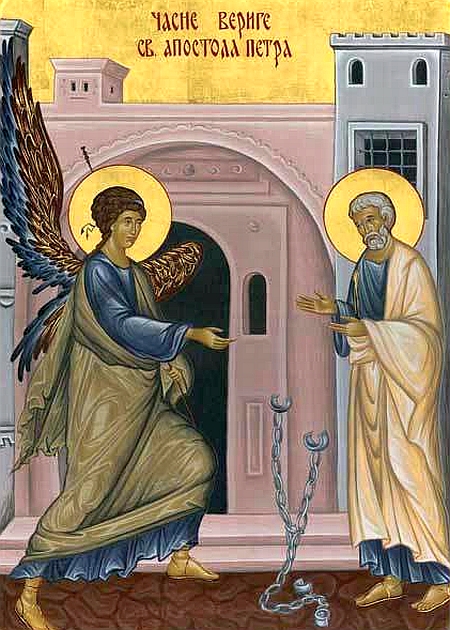
Herod Agrippa, the grandson of Herod the Great and king of the Jews, grew wroth against the Church of Christ, and slew James, the brother of John the Evangelist. Seeing that this pleased the Jews, he took Peter also into custody and locked him up in prison, intending to keep him there until after the feast of the Passover, so that he could win the favor of the people by presenting him to them as a victim. But the Apostle was saved when he was miraculously set free by an Angel (Acts 12:1-19). The Chains wherewith the Apostle was bound received from his most sacred body the grace of sanctification and healing, which is bestowed upon the faithful who draw nigh with faith.

That such sacred treasures work wonders and many healings is witnessed by the divine Scripture, where it speaks concerning Paul, saying that the Christians in Ephesus had such reverence for him, that his handkerchiefs and aprons, taken up with much reverence, healed the sick of their maladies: „So that from his body were brought unto the sick handkerchiefs or aprons, and the diseases departed from them, and the evil spirits went out of them” (Acts 19:12). But not only the Apostles’ clothing (which certainly touched the bodies of the sick), but even their shadow alone performedhealings. On beholding this, people put their sick on stretchers and beds and brought them out into the streets that, when Peter passed by, his shadow „might overshadow some of them”(Acts 5:15). From this the Orthodox Catholic Church has learned to show reverence and piety not only to the relics of their bodies, but also in the clothing of God’s Saints.

For three centuries the Chains were kept in Jerusalem, and those afflicted with illness and approached them with faith received healing. Patriarch Juvenal (July 2) presented the Chains to Eudokia, wife of the emperor Theodosius the Younger, and she in turn transferred them from Jerusalem to Constantinople in either the year 437 or 439.

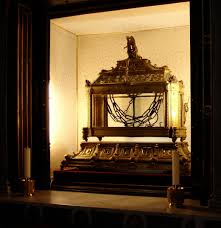
Eudokia sent one Chain to Rome to her daughter Eudokia (the wife of Valentinian), who built a church on the Esquiline Hill dedicated to the Apostle Peter and placed the Chains in it. There were other Chains in Rome, such as that which had bound the saint during his nine month imprisonment in the Mamertine Prison near the Forum, with which the Apostle Peter was shackled before his martyrdom under the Emperor Nero. These were also placed in the church. It is said that when the pope compared the two Chains, they miraculously fused together into one unbreakable series of links. Because of this miracle, Empress Eudokia built the Basilica of Saint Peter in Chains (San Pietro in Vincoli), and dedicated it to the apostle in the year 442. The relic is now kept in a golden urn beneath the high altar, close to the famous statue of Michelangelo’s Moses.

The basilica has undergone several restorations and rebuildings, including a restoration by Pope Adrian I, a rebuilding by Pope Sixtus IV and another by Pope Julius II. There was also a renovation in 1875. Some modernizations were made at that time.

Michelangelo’s Moses, which dates from 1515, is the most notable piece of artwork in the basilica. Originally intended as part of a 40-statue funeral monument for Pope Julius II, Moses became the Pope’s funeral monument and tomb in his family’s church.

Further, Arator, Subdeacon of the Roman Church in the sixth century, wrote that the Chains wherewith Peter was bound at Jerusalem, or certainly some of them, were preserved at Rome in his own time, and consequently the veneration of Peter’s Chains greatly increased; especially when, as we learn from other records of the Church of Rome, a basilica was built by the younger Eudokia, wife of Valentinian III, on the Esquiline Hill, under the name of Saint Peter in Chains. This temple, or a re-building of it, was dedicated on August 1st, whence the day was placed in the Roman Calendar as the Feast of Saint Peter’s Chains, afterwards called in England Lammas Day, from the custom of offering loaves of bread made from the first-gathered grain of the year, in thanksgiving from the beginning of the harvest. And, because of his Chains, this holy Apostle is often invoked for those in bondage.

Two Miracles of the Chains of the Apostle Peter

When Constantine the Great became emperor of Rome and ended the persecutions against the Church, the Christians of Rome gathered the relics of the Apostle Peter together with the Chains that held him in prison in Rome, and a temple was dedicated to them by the emperor. The Chains were greatly venerated by the faithful, for just as the shadow of the apostle worked miracles so also did the Chains that held him. The relics of the Apostle Peter were placed on a throne in a hidden area of the temple to prevent its theft, and this area was only opened three times a year for Christians to go and venerate the apostle seated on his throne.Around this time a man went to the then Orthodox Pope of Rome to confess a sin which heavily burdened his soul. The Pope heard his confession and gave him a penance that in order to be released from the burden of his sin he would have to be chained with the heavy Chains of Peter all around his body and walk around the entire church seven times. After he completed his seventh walk around he was to go to the hidden chamber which contained the holy relics of St. Peter and knock with his head on the locked door. If the door opened on its own, then this would be a sign that the man’s sin had been forgiven him. The man did as he was told in humble obedience and knocked on the chamber door with his head, and to his great amazement and gratitude the locked door unchained itself and opened. This miracle became famous far and wide and from then on all those who came to the Pope for confession were prescribed the same manner of penance for the healing of their soul.

One day a man who worked on ships as a tradesman fell into a great tragedy that left him poor and caused him to lose all of his possessions. Coming to the point where he had not the means to live he prayed to St. Peter to loan him the golden shoe that was placed on the relic of his foot in his church. He promised the apostle that if he granted him this loan that once he was financially settled he would return from his trip with a golden shoe more honorable than the first. He then asked the permission of St. Peter for him to make up a lie so as to go to confession to the Pope and hence be tied in the Chains to walk around the church seven times, and from there to proceed to the locked chamber which contained his relics and for the door to open for him so that he may receive the golden shoe.

The man then proceeded to the Church of the Apostle Peter in Rome and confessed a sin which he in fact did not commit. As was his custom, the Pope placed the man in the Chains of the Apostle Peter and he walked around the entire perimeter of the church seven times. From there he proceeded to the chamber and with his head he knocked on the locked door. The chains in a miraculous manner fell off the door and he proceeded to the throne of the Apostle Peter on which sat his holy relics. Then, in a wondrous manner, the apostle leaned out one of his legs to the man so as to give him his golden shoe. The man, full of gratitude, took the shoe and left the church.

The doors to the chamber were again locked and no one knew of what happened until the time came for the chamber door to be unlocked for one of the three feasts in which all were permitted to go in an venerate the apostle. When the Pope saw the golden shoe missing off of St. Peter’s foot he was deeply grieved on being deceived, but he also knew that this could not have happened unless the Lord and St. Peter allowed it to be so, therefore he considered the circumstance as something done by the will of God. In return he had another golden shoe made like the first and placed on the foot of St. Peter.

Meanwhile the man who had fallen into tragedy and was given by St. Peter the loan of his golden shoe was greatly blessed financially. He became very wealthy, but also very greedy. Upon hearing that the Pope replaced the loaned out golden shoe for another, the man theorized that he no longer needed to fulfill his vow. That night however St. Peter appeared to the man and reminded him of his debt. The man therefore hurriedly set out to have a golden shoe made to fulfill his vow. With his golden shoe in hand the man went to the Pope and confessed his sin. He was placed in the Chains and made to walk the entire perimeter of the church seven times, after which he proceeded to the locked chamber to knock on the door with his head. The door of the chamber miraculously opened and the forgiven man was allowed to go into the private chamber and venerate the relics. He took the shoe the Pope had recently made off the foot of the saint and replaced it with the golden shoe he had made. When this was done another wonder took place – the two feet of the apostle opened a slight bit as if bidding him to place the third golden shoe in between his other two feet. When this was done the man left, having paid his debt and with his sin forgiven.

(www.johnsanidopoulos.com)

[:ro]

„Inchinarea cinstitului lant al Sfantului Apostol Petru” este praznuita de Biserica Ortodoxa in ziua de 16 ianuarie. Amintirea cinstitului lant al Sfantului Apostol Petru este o praznuire care daruieste nadejde tuturor acelora care patimesc pe nedrept in lumea aceasta inrobita de pacat, atat in propria familie, cat si in societate.

Patimirea pe nedrept dusa cu smerenie umple inima de har, curatindu-se astfel toate patimile si lucrarile duhurilor necurate: „Fericiti cei prigoniti pentru dreptate, ca a lor este imparatia cerurilor. Fericiti veti fi voi, cand va vor ocara si va vor prigoni din pricina Mea si vor zice tot cuvantul rau impotriva voastra, mintind” (Matei 5, 10-11).

Lanturile cinstite ale Sfantului Petru

Sfantul Apostol Petru, numit mai inainte Simon, a fost un pescar din localitatea Betsaida, asezata pe malul nordic al lacului Ghenizaret, in regiunea Galileea. El a fost fratele mai mic al Sfantului Apostol Andrei. Mantuitorul l-a chemat la apostolie mai intai pe Sfantul Andrei, iar mai apoi a venit si fratele acestuia, Simon (Petru). „Unul dintre cei doi care auzisera de la Ioan (Botezatorul) si venisera dupa Iisus era Andrei, fratele lui Simon Petru. Acesta a gasit intai pe Simon, fratele sau, si i-a zis: Am gasit pe Mesia (care se talcuieste: Hristos)” (Ioan 1, 40-41).

Candva intre anii 42-44, dupa ce regele Agripa I (care a domnit intre anii 40-44) i-a taiat capul Sfantului Iacob al lui Zevedeu, in Ierusalim, acesta l-a prins si l-a aruncat in temnita si pe Sfantul Petru. Potrivit marturiei Sfantului Apostol Luca, el a fost pus in lanturi in temnita militara, intre alti doi ostasi, insa, noaptea, a fost eliberat in chip minunat de un inger al Domnului.
Lanturile cinstite ale Sfantului Petru

„Si in vremea aceea, regele Irod Agripa a pus mana pe unii din Biserica, ca sa-i piarda. Si a ucis cu sabia pe Iacov, fratele lui Ioan. Si vazand ca este pe placul iudeilor, a mai luat si pe Petru, (si erau zilele Azimelor), pe care si prinzandu-l l-a bagat in temnita, dandu-l la patru straji de cate patru ostasi, ca sa-l pazeasca, vrand sa-l scoata la popor dupa Pasti. Deci Petru era pazit in temnita si se facea necontenit rugaciune catre Dumnezeu pentru el, de catre Biserica. Dar cand Irod era sa-l scoata afara, in noaptea aceea, Petru dormea intre doi ostasi, legat cu doua lanturi, iar inaintea usii paznicii pazeau temnita. Si iata un inger al Domnului a venit deodată, iar în cameră a strălucit lumină. Şi lovind pe Petru în coastă, îngerul l-a deşteptat, zicând: Scoală-te degrabă! Şi lanţurile i-au căzut de la mâini. Si a zis ingerul catre el: Incinge-te si incalta-te cu sandalele. Si el a facut asa. Si i-a zis lui: Pune haina pe tine si vino dupa mine. Si, iesind, mergea dupa inger, dar nu stia ca ceea ce s-a facut prin inger este adevarat, ci i se parea ca vede vedenie. Si trecand de straja intai si de a doua, au ajuns la poarta cea de fier, care duce in cetate, si poarta s-a deschis singura. Si iesind, au trecut o ulita si indata ingerul s-a departat de la el. Si Petru, venindu-si in sine, a zis: Acum stiu cu adevarat ca Domnul a trimis pe ingerul Sau si m-a scos din mana lui Irod si din toate cate astepta poporul iudeilor” (Fapte 12, 1-11).

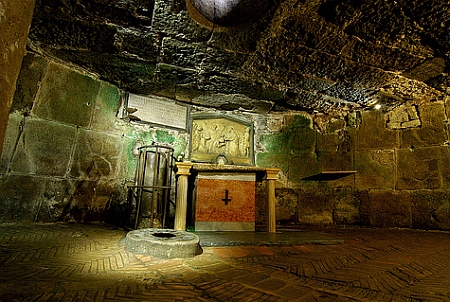
Mai tarziu, prin anul 64, Sfantul Petru a fost iarasi prins, de aceasta data el fiind inchis intr-o temnita din Roma, numita „Carcera Mamertinica” si aflata intre Capitoliu si Forumul Roman. Aceasta temnita avea doua celule, una superioara, unde era inchisoarea Romei, si alta subterana, crezuta a fi cea mai veche camera din Roma (numita „Tullianum”); mai tarziu, capela subterana va primi numele de „Sfantul Petru in Carcera”.

Multe dintre lucrurile folosite de sfinti au fost pastrate cu multa cinste si evlavie, dupa moartea acelora. O parte dintre acestea au ramas binefacatoare, tamaduind multi credinciosi de patimi si de boli. Lanturile in care a fost intemnitat Sfantul Petru sunt unele dintre aceste lucruri binecuvantate. Potrivit traditiei crestine, Lanturile Sfantului Petru tamaduiesc neputintele si gonesc duhurile necurate.
Lanturile cinstite ale Sfantului Petru

In mareala basilica numita „Sfantul Petru in Lanturi” (San Pietro in Vincoli), din Roma, se pastreaza presupusele lanturi cu care Apostolul Petru a fost legat in inchisoarea din Ierusalim, precum si lanturile cu care acesta a fost inlantuit in „Carcera Mamertinica”. Lanturile din „Carcera Mamertinica” ar fi fost descoperite la inceputul secolului al II-lea, de catre temnicerul roman Quirinus de Neus.

Lantul din Ierusalim a stat ascuns printre crestini pana in anul 439, cand Sfantul Juvenalie, patriarhul Ierusalimului (422 – 2 iulie 458), l-a daruit imparatesei Evdochia Augusta (401-460), sotia imparatului Teodosie al II-lea (401-450), drept multumire pentru ajutoarele daruite bisericilor din oras. Imparateasa Evdochia a dus cinstitul Lant in Constantinopol, asezandu-l in vechea biserica inchinata Sfintei Sofia.
O parte din acest lant a fost daruit de imparateasa Evdochia fiicei sale, Eudoxia, sotia imparatului Valentinian al III-lea (419-455). Eudoxia a asezat cinstitul lant in BisericaSfantul Petru, din Roma, in care se afla deja inca un Lant al Sfantului Petru, cu care acesta fusese legat in vremea persecutiei imparatului pagan Nero (54-68).

Sarbatoarea numita „Inchinarea cinstitului lant al Sfantului Apostol Petru” este foarte veche, ea existand poate chiar de la inceputul secolului al II-lea. In ziua de 16 ianuarie, Biserica Ortodoxa marturiseste minunea eliberarii din temnita a Sfantului Petru si se inchina cinstitelor lui lanturi (lantul din temnita din Ierusalim si lantul din temnita din Roma).
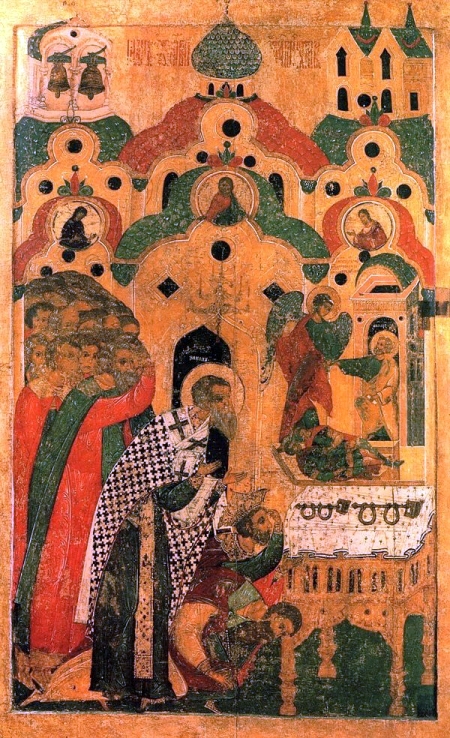
Lanturile cinstite ale Sfantului Petru

„Sa cinstim lantul celui preamarit, intru care se dezleaga legaturile patimilor. Caci cu vrednicie se sfinteste cu darurile cele negraite ale preainteleptului Petru; si de la dansul cu adevarat luand har pururea curgator, rupe si acesta cu putere dumnezeiasca legaturile necazurilor; precum acela rupea legaturile greselilor si daruieste dezlegare de cele rele.”

„Iarasi ne ridica pe noi fierbintele ocrotitor Petru, piatra credintei, la duhovnicescul ospat, punand inaintea noastra cinstitul sau lant, ca pe un pranz preaales, spre mangaierea celor necajiti, si ca liman celor inviforati. Veniti toti sa-L sarutam si pe Cel ce l-a preamarit pe el, sa-L rugam: Cu rugaciunile lui, Hristoase, mantuieste sufletele noastre” (Cantari din slujba Vecernia praznicului).

(Teodor Danalache – crestinortodox.ro)

[:]