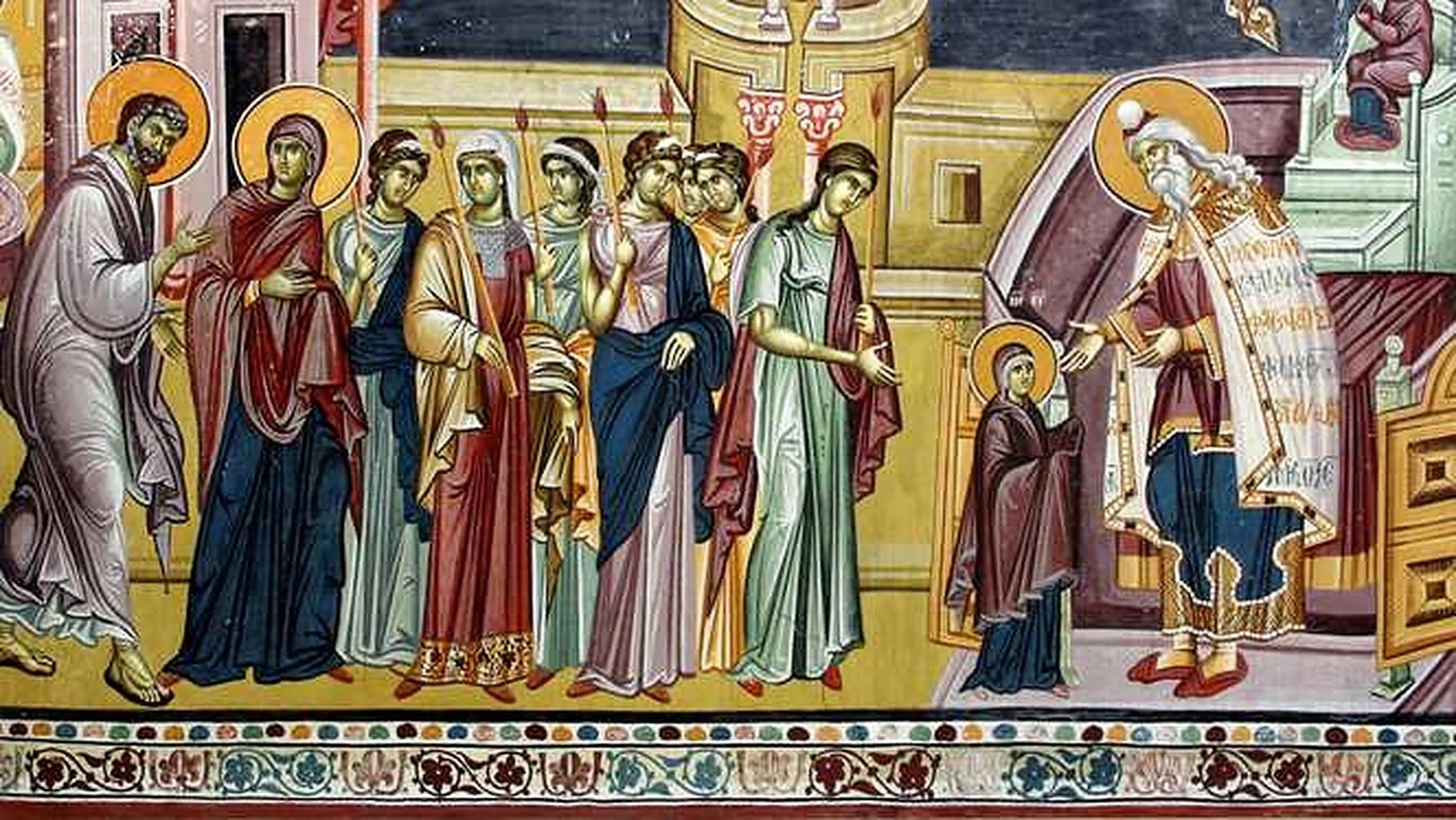
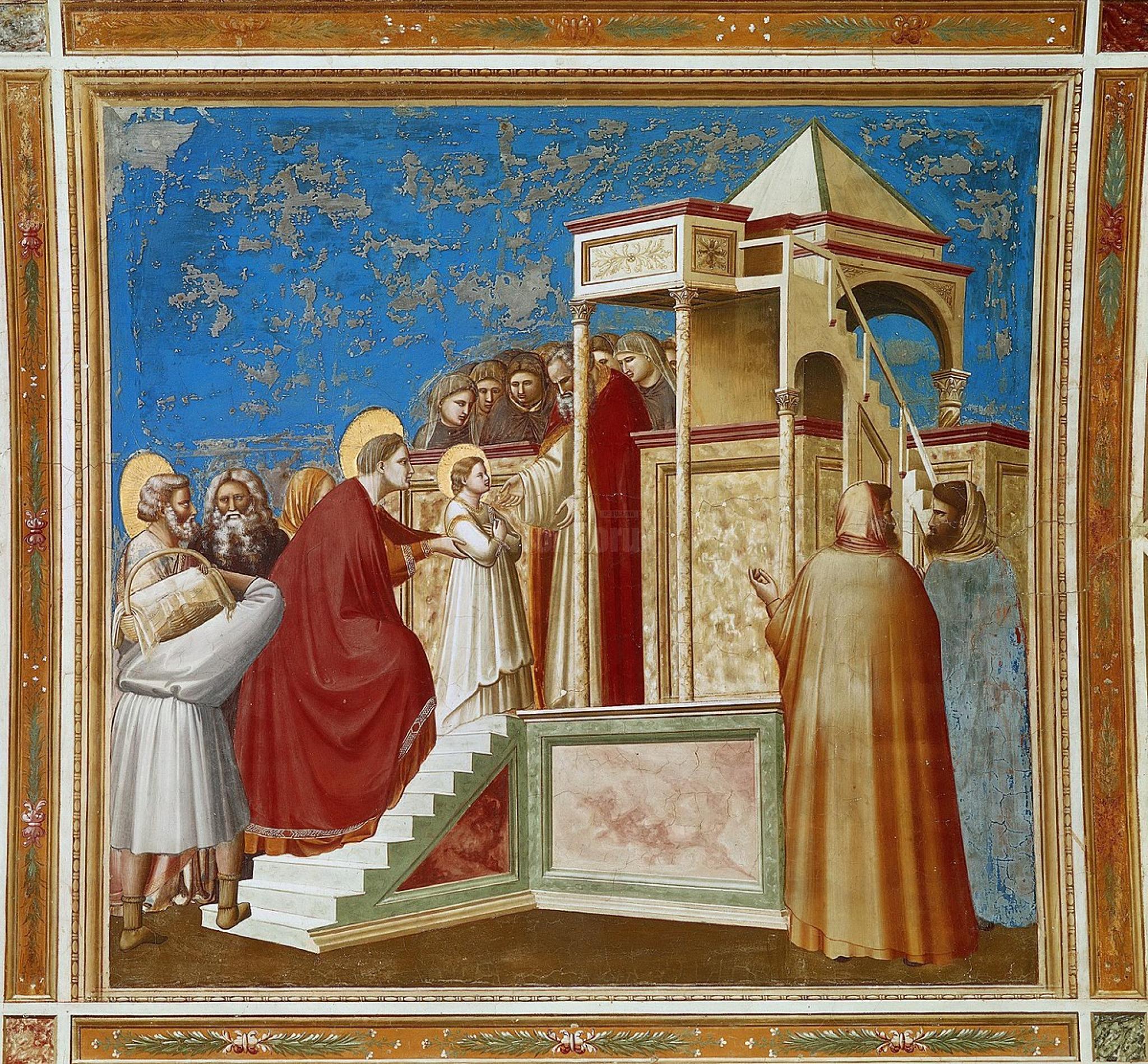
 Intrarea în biserică a Maicii Domnului este sărbătoarea care anticipează marele praznic al Naşterii Domnului nostru Iisus Hristos. Numită în popor Vovidenia sau Ovedenia, această sărbătoare aminteşte de ziua în care Sfinţii Ioachim şi Ana au adus pe fiica lor Maria la Templul din Ierusalim, unde a rămas până la vârsta de 15 ani. Este cel mai nou dintre praznicele închinate Fecioarei Maria, luând naştere în secolul al VI-lea.
În fiecare an, la 21 noiembrie, creştinătatea prăznuieşte momentul în care Sfinţii şi Drepţii Ioachim şi Ana au adus-o la Templul din Ierusalim şi au închinat-o lui Dumnezeu pe fiica lor, Maria, cea care a devenit Născătoarea de Dumnezeu. Ioachim şi Ana au împlinit astfel promisiunea făcută în rugăciunile lor către Dumnezeu, că dacă vor fi binecuvântaţi la bătrâneţe cu un copil, îl vor dărui Lui.
Cei doi erau foarte afectaţi. Deoarece nu aveau copii, erau consideraţi de societatea de atunci pedepsiţi de Dumnezeu. Sfinţii Părinţi şi Sfânta Tradiţie vorbesc şi despre un episod petrecut la Templu. Un evreu din seminţia lui Ruben l-a umilit pe bunul Ioachim în timp ce se afla în Templu, spunându-i: „De ce aduci darurile tale înaintea altora? Eşti nevrednic, pentru că nu ai copii, pentru cine ştie ce păcate ascunse“. Afectat de aceste cuvinte, Ioachim s-a retras la turmele sale, rugându-se, iar Ana s-a dus să se roage în grădină sub un dafin. Acum au făcut promisiunea sfântă, au cerut lui Dumnezeu copilul mult dorit, promiţând că îl vor dărui Lui. Ascultând rugăciunile, Dumnezeu a trimis pe îngerul Său care i-a vestit Sfintei Ana că va avea un copil. În lucrarea despre viaţa Sfintei Fecioare Maria, Sfântul Maxim Mărturisitorul vorbeşte de un sens mai adânc al dorinţei lui Ioachim şi a Anei de a fi părinţi: „Ei voiau să se nască ceva nu numai pentru a şterge ocara lor, dar şi cea a lumii întregi, pentru a o duce la o slavă mai înaltă“.
 Fecioara Maria a intrat în Sfânta Sfintelor
Când prunca, dăruită de Dumnezeu bătrânilor Ioachim şi Ana cea stearpă, a împlinit 3 ani, părinţii au dăruit-o Templului din Ierusalim. Potrivit Fericitului Ieronim, la intrarea în Templu erau cincisprezece trepte, după numărul celor cincisprezece psalmi „ai treptelor“, numiţi astfel pentru că la fiecare din acele trepte se cânta câte un psalm de către preoţii şi leviţii care urmau să slujească. Ajunşi la Templu, Părinţii Ioachim şi Ana au aşezat-o pe Maria pe prima treaptă, iar ea, îndată şi nesprijinită de nimeni, a alergat pe trepte, ajungând repede la cea mai înaltă, unde a şi rămas în picioare, întărită de harul lui Dumnezeu. Cu toţii s-au mirat, dar, prin descoperire dumnezeiască, numai Zaharia, marele arhiereu, a văzut în prunca de doar 3 ani pe cea care va fi „Maica Vieţii“. Astfel, arhiereul Zaharia o duce pe Fecioara Maria în Sfânta Sfintelor, locul unde intră doar arhiereul o dată pe an. Aceasta a făcut-o din insuflarea lui Dumnezeu, Cel ce avea să Se nască dintr-însa, spre îndreptarea şi mântuirea lumii celei stricate prin păcat.
Aici, în Sfânta Sfintelor, Fecioara Maria s-a pregătit, prin lucrarea Duhului Sfânt, pentru a deveni Templul lui Dumnezeu Celui Viu. Zaharia i-a oferit Sfânta Sfintelor ca loc de rugăciune, deosebit de celelalte fecioare de la Templu. Nici lor şi nici celor care slujeau la Templu nu le era cu putinţă să se apropie de Sfânta Sfintelor, pentru că nu aveau binecuvântarea arhiereului. Pe când Maica Domnului, deşi fragedă ca vârstă, era desăvârşită în ceea ce priveşte darul lui Dumnezeu. Aici, la Templul din Ierusalim, erau trei rânduri de chilii, de locuinţe în care trăiau, cu frică de Dumnezeu, fecioare şi văduve închinate Domnului, precum şi preoţii şi slujitorii. La Templu a rămas până la vârsta de 15 ani, unde Sfântul Arhanghel Gavriil o hrănea şi îi descifra tainele Scripturilor, pregătind-o pentru înalta chemare rânduită de Dumnezeu. Sfântul Maxim Mărturisitorul spune, în lucrarea amintită, că fecioarele care o însoţeau pe Fecioara Maria reprezintă sufletele feciorelnice care, prin mijlocirea Maicii Domnului, vor fi conduse, de-a lungul veacurilor, la fericirea veşnică, în Împărăţia Fiului ei.
Intrarea Maicii Domnului în biserică este un eveniment ce marchează împlinirea a trei făgăduinţe. Făgăduinţa părinţilor ei de a o consacra Domnului, drept mulţumire pentru că le-au fost ascultate rugăciunile, având un copil. Făgăduinţa făcută de Însuşi Dumnezeu prin proroci, că va alege o Fecioară spre a-i fi şi Mamă. Şi nu în ultimul rând, Fecioara Maria e rod al făgăduinţei omeneşti, dăruindu-se ea însăşi Domnului, devenind Mireasă „nenuntită“ sau „pururea Fecioară“.
Intrarea în biserică a Maicii Domnului este numită în popor Vovidenia sau Ovedenia, care în slavonă înseamnă „intrare“. Dacă continuăm cu explicaţia numelor, amintim că Ioachim se tâlcuieşte „pregătirea Domnului“, fiindcă din el a fost pregătită Fecioara ca Templu al Domnului, după cum spune Sfântul Epifanie de Constanţia, într-o omilie despre Sfânta Fecioară Maria. Iar Ana, la rândul său, se tâlcuieşte „har“, fiindcă har au luat Ioachim şi Ana ca să odrăslească un astfel de rod prin rugăciune, dobândind pe Sfânta Fecioară. Maria se tâlcuieşte „Doamnă“, dar şi „nădejde“, fiindcă a născut Domn, pe Hristos, nădejdea întregii lumi. Maria se tâlcuieşte, de asemenea, „smirna mării“, fiindcă trebuia să nască Mărgăritarul nemuritor în mare, adică în lume. Mare îi zice lumii întregi, căreia Fecioara i-a dăruit linişte, născând pe limanul Hristos. „Prin urmare, fericitul nume al Copilei vrednice de laudă Maria se mai tâlcuieşte şi «cea luminată», cea care a fost luminată de către Fiul lui Dumnezeu şi i-a luminat până la marginile pământului pe cei ce au crezut în Treime. Căci este mireasă a Treimii Sfânta Copilă Născătoare de Dumnezeu Maria, comoara cea cu totul neştiută a rânduielii divine, către care a zis Gavriil: «Bucură-te, cea plină de har, Domnul este cu tine». Gavriil i-a dat de ştire şi Tatăl a trimis ca arvună din ceruri pe Duhul Cel Sfânt, Care S-a abătut peste Fecioara pentru Fiul Cel Unul Născut, mireasă cerească, pe care Tatăl a iubit-o, Fiul a sălăşluit-o, Duhul Sfânt a îndrăgit-o. Căci aceasta este mireasă şi «cămară» şi din aceasta a ieşit Mirele Hristos; veşmânt feciorelnic, după cântarea profetului David: «În soare Şi-a pus locaşul Său şi El este ca un Mire ce iese din cămara Sa» (Ps. 28, 5)“, mai spune Sfântul Epifanie de Constanţia.
 Prima sărbătorire, în anul 543
Cea mai nouă dintre sărbătorile închinate Fecioarei Maria, Intrarea în biserică a Maicii Domnului este de origine ierusalimiteană, luând naştere în secolul al VI-lea. La 20 noiembrie 543, împăratul Iustinian cel Mare (527-565) a zidit la Ierusalim, lângă ruinele Templului, o biserică închinată Sfintei Fecioare, care, spre deosebire de una mai veche, a fost numită Biserica „Sfânta Maria“-cea Nouă. Conform obiceiului, a doua zi după sfinţire, adică la 21 noiembrie, a început să fie serbat ocrotitorul bisericii, adică însăşi Maica Domnului, serbarea fiind consacrată aducerii ei la Templu. Înainte de secolul al VI-lea, sărbătoarea a fost generalizată în tot Orientul.
În Apus, ea a fost introdusă sporadic, probabil prin influenţa mănăstirilor greceşti din Italia, mai întâi în Anglia (sec. XI), apoi în Franţa, întâi în Avignon, la 1371. Generalizarea ei în întreaga Biserică Apuseană a început în 1472 şi s-a definitivat din anul 1585.