
[:en]
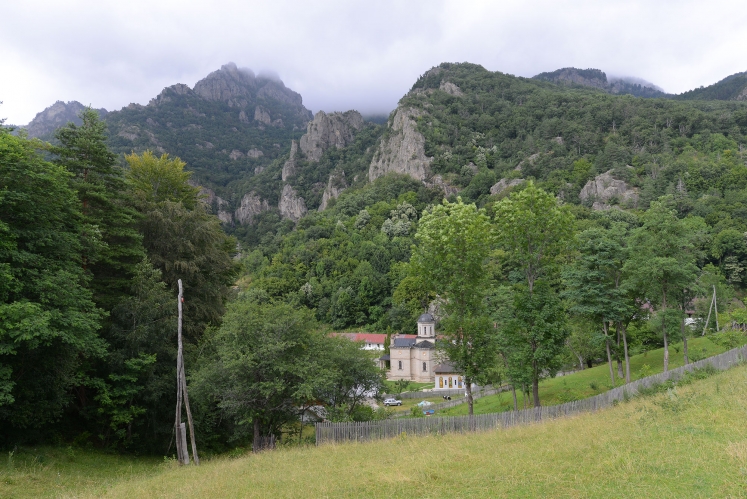
In the life of saints there is no tomorrow. Maybe just a night. Or a continuous today. A truth that I understand the Archdiocese of Râmnic Stânişoara Monastery, listening to Father Abbot Lawrence, with whom I walked the paths of Pious Saint Neophytos and Meletios, who had some cracks in the rock here. This „last night” or „continuous day” is temporarily boundary marker which defines only the saint’s life here on earth. For where he is now there tomorrow, but forever.
The Holy Synod of the Romanian Orthodox Church passed this year among the saints Sts Neophyte and Meletios, Monastery Stânişoara having feast day on September 3rd. These saints were called hermits in Mount Savage, and their disciples founded the monastery, which at first was called Hermitage Nucet. Not over several days will be proclaiming their canonization. For that reason, we wanted to find work and know the places where her away from the world, and they kept grinding souls until they came to incandescence and broke windows of time, „escaped” beyond the ocean without shores eternity. The road to the caves where hermits have been an attempt not only physical but also an initiatory journey, because in the end we have received the gift of a piece of joy the need of saints. Even if after a few hours, we had to descend into the world-the world wasting what little clumsy we acquired fortune.
Most live with bears
Pious Saint Neophytos was born in the sixteenth century. The couple received the angelic face of monasticism in the monastery tails. After several years of listening in community, desiring perfect life, he received the blessing of the abbot to go into solitude. He dug a cell the west side of the mountain. There was only forced into harsh labor and in unceasing prayer. Fasting and praying all week, and only occasionally, on Sundays and holidays, descended from the hermitage of Turnu be confessing to the Pious Daniil, listen Mass and partaking of the Holy Body and Blood of our Saviour Christ. After a life given completely to the monastic life and reached high levels of holiness, she received the gift of the Holy Spirit tears and intercession for the world. After 30 years spent in wilderness places, suffering the harshness of winters, enduring great temptations of the devil, and gave his soul in God’s hands there in the cave, no one knew. His body was discovered by a monk at the monastery Cozia, appointed to lead the hermits food. He took the body of the saint and brought him to the monastery to bury him. But at night, I was Neophytos appeared in a dream and scolded him, commanding him to bring his body back. That same night, the holy abbot was shown urging him to put into place ascetic his body. The next day, Venerable monk and took the body, along with another monk led him into his cave. Angry trouble he had made, the monk said: „The bears have lived with the bears to stay!” But soon I was back head back. Then, with great cries, he fell to a monastery, confessing their sin. Parents, along with the monastery’s abbot, Neophytos prayed to forgive the sinner and he was healed. In this way God glorified His pleasure showing it before all miracle worker and healer. The news was soon spread to nearby villages and many faithful turned their steps toward his cave, where he worshiped and received spiritual comfort and healing diseases. Neophyte relics are preserved today in the church of the Monastery.
„Last night” Father Lawrence
The road through the woods, on the brink, to the grotto of the hermit, traveled with Father Lawrence, abbot of the Monastery, was accompanied by a dialogue in which I had to learn not only details about the saint’s life and relics, but also to understand the depth of thoughts and deep sense of living like this forever. Without good at first, wondering what you, the parent report to a neutral „last night” life’s entry into monasticism, years of service, everything. Later, I was to comprehend why. Arriving at the notch in the rock, the father abbot told us: „Here was forced Pious Saint Neophytos. And here stood some of his holy relics long: the head and a few fragments of flesh. Some say that some of them were taken by locals who came here to pray. I heard that His Eminence Irenaeus, Metropolitan of Oltenia, when he was a brother to Frăsinei saved the head of the saint. And all His Eminence was occupied by the canonization of the two parents pious hermit here. And we thank for this care. See this wooden cross? It has a disturbing story. I do not know when it was made and brought here anyway was spent long ago. Now they painted a brothers John and George, who smoothed the rock to lift this small chapel in which they built cell. Before coming here so-called tourists were fire roasted small, who knows what they were doing, as people did not give importance to things. At one point they made the cross and set it on fire! State and Brothers, cross the jar almost all night. But has not it caught fire, as it turns out. Those people were scared, they went to Father Cornel Oprescu, who looked around, and told him the story. Father told it’s a miracle. Then people took the cross, mounted it and brought it back. Now here I live two blood brothers, John and George, the former city workers. Now I’m not home. They all came to the monastery, were attached to the church. Cleopas Father told me to do here a church. And these two brothers were leveled, they broke the rock and carried it piece by piece. And Dumitru Panu, a benevolent, now gone to the Lord, raised metal church, „says Father Abbot.
The place seems unreal. From the old grotto of Saint Neophytos left just a wet cut into the rock, where brothers light candles and pray. Metal church and cell wall beneath it, they live two, triangular table outside, two apples and a knife that rest on it, collected wood for winter and mountain crevices in the rock fig tree sunrise remember Athonite cells. And above all this, an unearthly silence predisposes to silence.
On the way to the other grotto continue the dialogue started with Fr. Lawrence, trying to find out what is this „last night”.
„Well, brethren, in the world, people are time with the minute, by the day. We, here we are with life. We never hurry. In our time is measured entirely alive. We must prepare permanently to serve God. And my life and ministry and nevoirea happened last night about here. The rest was not much. My whole life, our whole life of the monks, means a last night or something. And that short. Meaning of life do not look now, here. We will discover when we leave the earth. And we will see if we have a favorable response only up there. For it will not be favorable, there was nothing but an unsuccessful transition from yesterday to today! I mean, kind of a waste of time, „confesses father.
Fountain born of prayer
Arriving back in the cloister, I passed the other side of the mountain, climbing to cave Venerable Meletios, in an arduous uphill through my screen rolled up.
This saint lived in the hermitage Stânişoarei at the turn of the centuries XVI and XVII century. It is believed that the place was in a village near the Cozia Monastery, where he entered as a dweller from infancy. Here was forced in fasting and prayer until the day when, at his request, the abbot gave him the blessing to go to parents and to hermits need beyond Olt. Ven has dug a cave in the south of Mount Savage.
There was labour for over 40 years. Six days shall need the cave and on Sunday went to Daniil, from Turnu confessor, and received Holy Communion. Every day she brought a pitcher of water on, to trouble himself and at the same time to pray more. In his old age, however, unable descend from the cave, was prayed to God and the Virgin care, water flowed just before his cave, water flowing today, called „Spring Meletios”. God glorified him with this holy miracles, healing and consolation of sorrowing souls, pious came to be known for his holiness. Happily ever after, and God has entrusted his soul. Part of his venerable relics, who rested a long time in the grotto were later divided believers, and the place is revered today.
„After a while, veiţuitorii monastery caught source. Now the monastery is supplied with its water, which flows through prayer. And it is one of the best water in the area. Is healing, „says the father abbot.
Grotto of St. breathes light of a very concrete wellbeing and tranquility. Tight space resembles an eagle’s nest. Icons, candles, cross caught the entry arch, beneath which you must pass penetrate inside, forcing you to humility and worship. In this place, you know how it can be gathered sky in the heart of stone and how small can be when there is no tomorrow, and eternity is just a „last night” or „an ongoing today.”
Do not pull the earth for you
I then descended to the monastery tired, but still, at heart, because we had two pious hermits in their ongoing site today, giving us a bit of their experience free from errors.
On the way back, careful not to spend anyway gift received, God ordained into the woods to meet the two brothers, John and George, a wooden table on the roadside, eating bread with cherries. Returning from town, from the doctor. We stopped and listened to their stories. John is 70 years old and Gheorghe 55.
„I worked on Electromontaj. But little went in monasteries, „says John. „Then, discovering the place, I retired there. 20 years stand at the Grotto of Saint Neophytos. In 1992 I started work on preparing the ground for cell and chapel. I would have wanted to lift the stone church, but God has ordained otherwise. Living in the place where the saint had a very good, only if the ‘do not you land „, all of the wastes, you, as we do people. Together with my brother, who is suffering and who followed me a year ago, we do our prayers, read Chapel of Our Lady, one unsettled. We do everything that obligation. And that allows us to stay there. There have been others who wanted to settle in the area but came without the blessing with „earth after her,” and did not resist. I went to Father Cleophas. His Holiness told me that if I stand there I am not allowed to eat anything but bread and water. And when I răzbeşte hunger, to ask a blessing and to get away from that place and consumer else. When I worked in his cell, in the evening I went and ate at the monastery. Father Abbot told me that neither should still prostrate, because breaking the rock hammer 5kg is that if I make a thousand prostrations! Then Father Gelasius from Frăsinei told me to eat wheat. I grinded beans and chewed them up. But you know how much force I used? I gave hammered … But it is not easy the monastic life. About Saint Neophytos know I never did fire. He enjoyed the grotto that as it was. We live under the chapel’s do fire eating fruit, eating and convent, and make food because we can not survive otherwise. I do not consider myself a hermit. Being a hermit means talking to God, as St. Arsenius the Great spoke. What happens to us is the mercy of God. At that sometimes last is first, and the first may be the last. When I decided to settle down here, Father Lavrete from Frăsinei not gave me a blessing. But when I went to his piety and I said I temptation and can not finish what I wanted, she told me that gives me this time blagolovenie to remain there until everything neck. And when sanctify work, I can leave. Worthy to remember when Gherasim, Archbishop Râmnic climbed to the cave, I thought that everything is ready and can not leave. But His Eminence asked me if I know what to do. I looked at some canon hard as father gave Cleopas. But he said, ‘Stay here, eat and pray as you know!’ And I was, „John tells his brother.
This is how we lived in the caves of the saints from Stânişoara, where we returned with something better, we believe, even with inefficiency, what little fortune we gained from saints …
[:ro]
În viaţa sfinţilor nu există mâine. Poate doar un aseară. Sau un continuu azi. Un adevăr pe care l-am înțeles la Mănăstirea Stânișoara din Arhiepiscopia Râmnicului, ascultându-l pe părintele stareț Laurențiu, împreună cu care am umblat pe cărările Sfinților Cuvioși Neofit și Meletie, care s-au nevoit aici în niște crăpături de stâncă. Acest „aseară” sau „continuu azi” este reperul temporar în hotarul căruia viața sfântului se definește doar aici, pe pământ. Pentru că acolo unde el se află acum nu există mâine, ci doar veșnicie.
Sfântul Sinod al Bisericii Ortodoxe Române i-a trecut în acest an în rândul sfinților pe Cuvioşii Neofit şi Meletie, de la Mănăstirea Stânişoara, având zi de prăznuire data de 3 septembrie. Acești sfinți au sihăstrit în muntele numit Sălbaticul, iar ucenicii lor au întemeiat mănăstirea, care la început s-a numit Schitul Nucet. Nu peste multe zile se va face proclamarea canonizării lor. Iată motivul pentru care am dorit să le aflăm lucrarea și să cunoaștem locurile în care ei, departe de lume, și-au tot șlefuit sufletele până ce au ajuns la incandescență și au rupt zăgazurile timpului, „scăpând” dincolo, în oceanul fără de țărmuri al veșniciei. Drumul spre grotele în care au sihăstrit a fost nu numai o încercare fizică, ci și un parcurs inițiatic, pentru că la final am primit și noi o fărâmă din bucuria darului nevoirii sfinților. Chiar dacă, după câteva ceasuri, aveam să coborâm în lumea-lume, risipindu-ne neîndemânatici bruma de agoniseală dobândită.
Cel trăitor alături de urși
Sfântul Cuvios Neofit s-a născut în veacul al XVI-lea. De tânăr a primit chipul îngeresc al călugăriei în Mănăstirea Cozia. După mai mulţi ani de ascultare în obşte, dorind viaţă desăvârşită, a primit binecuvântarea stareţului să meargă în pustnicie. El şi-a săpat o chilie în partea de apus a muntelui. Acolo s-a nevoit singur în aspre osteneli şi în neîncetată rugăciune. Toată săptămâna postea şi se ruga, și numai din când în când, în duminici şi sărbători, cobora la sihăstria de la Turnu, se spovedea la Cuviosul Daniil, asculta Sfânta Liturghie și se împărtăşea cu Sfântul Trup şi Sânge al Mântuitorului nostru Hristos. După ce s-a dăruit cu totul vieţii pustniceşti şi a ajuns pe înalte trepte de sfinţenie, a primit de la Duhul Sfânt darul lacrimilor şi al mijlocirii pentru întreaga lume. După 30 de ani trăiţi în sălbăticia locurilor, suferind asprimea iernilor, răbdând grele ispite de la diavoli, şi-a dat sufletul în mâinile Domnului acolo în grotă, neştiut de nimeni. Trupul său a fost descoperit de un călugăr de la Mănăstirea Cozia, rânduit să ducă mâncare pustnicilor. Acesta a luat trupul sfântului şi l-a adus la mănăstire să-l îngroape. Dar noaptea, Cuviosul Neofit i s-a arătat în vis şi l-a certat, poruncindu-i să-i ducă trupul înapoi. În aceeași noapte, sfântul s-a arătat şi stareţului, îndemnându-l să aşeze la locul său de nevoinţă trupul său. A doua zi, călugărul a luat trupul Cuviosului şi, împreună cu un alt monah, l-a dus în peştera lui. Supărat de osteneala pe care o făcuse, monahul a zis: „Cu urşii ai trăit, cu urşii să rămâi!” Dar îndată i s-a întors capul spre spate. Atunci, cu vaiete mari, a coborât la mănăstire, mărturisindu-şi păcatul. Părinţii, împreună cu stareţul mănăstirii, s-au rugat Cuviosului Neofit să ierte pe cel păcătos şi acesta s-a vindecat. În felul acesta a preamărit Dumnezeu pe plăcutul Său, arătându-l înaintea tuturor făcător de minuni şi tămăduitor. Vestea s-a răspândit curând în satele de prin apropiere și mulţi credincioşi și-au îndreptat paşii spre peştera lui, unde se închinau şi primeau mângâiere sufletească şi vindecare de boli. Moaştele Sfântului Neofit se păstrează astăzi în biserica Mănăstirii Stânişoara.
„Aseara” părintelui Laurențiu
Drumul prin pădure, pe muchia prăpastiei, spre grota acestui sihastru, străbătut împreună cu părintele Laurențiu, starețul Mănăstirii Stânișoara, a fost însoțit de un dialog din care aveam să aflăm nu numai amănunte despre viața sfântului și a moaștelor, dar și să înțelegem adâncimea unor cugetări și sensul adânc al trăirii prezentului ca veșnicie. Fără să pricepem la început, tot ce îl întrebam, părintele raporta la un neutru „aseară”: viața lui, intrarea în monahism, anii de slujire, tot. Ceva mai târziu, aveam să ne dumirim de ce. Ajunși la scobitura din stâncă, părintele stareț ne-a spus: „Aici s-a nevoit Sfântul Cuvios Neofit. Și tot aici au stat o parte din sfintele lui moaște multă vreme: capul și câteva fragmente de trup. Unii spun că parte din ele ar fi fost luate de localnicii care veneau aici să se roage. Eu am auzit că Înaltpreasfințitul Părinte Irineu, Mitropolitul Olteniei, pe vremea când era frate la Frăsinei, a salvat capul sfântului. Și tot Înaltpreasfinția Sa s-a ocupat de canonizarea celor doi cuvioși părinți sihaștri de aici. Și noi îi mulțumim pentru această grijă. Vedeți crucea aceasta de lemn? Are o poveste tulburătoare. Nu știu când a fost făcută și adusă aici, oricum s-a petrecut demult. Acum au vopsit-o frații Ioan și Gheorghe, care au netezit stânca pentru ridicarea acestui mic paraclis sub care și-au zidit chilia. Înainte, veneau aici așa-ziși turiști, făceau focul, frigeau mici, cine știe ce mai făceau, ca oameni ce nu dădeau importanță lucrurilor sfinte. La un moment dat au desfăcut crucea și au pus-o pe foc! Și a stat, fraților, crucea în jar aproape toată noaptea. Dar nu s-a prins focul de ea, după cum se vede. Oamenii ăia s-au speriat, au mers la părintele Cornel Oprescu, care avea grijă pe aici, și i-au povestit întâmplarea. Părintele le-a spus că e o minune. Apoi, oamenii au luat crucea, au montat-o și au adus-o la loc. Acum, aici, locuiesc doi frați de sânge, Ioan și Gheorghe, foști muncitori pe la oraș. Acum nu sunt acasă. Ei au tot venit pe la mănăstire, s-au atașat de Biserică. Părintele Cleopa mi-a spus să facem aici o biserică. Iar frații ăștia doi au nivelat terenul, au spart stânca și au cărat-o bucată cu bucată. Iar Dumitru Panu, un binevoitor, plecat acum la Domnul, a ridicat bisericuța din metal”, ne spune părintele stareț.
Locul pare ireal. Din vechea grotă a Sfântului Neofit a mai rămas doar o tăietură umedă în stâncă, unde frații aprind lumânări și se roagă. Bisericuța metalică și chilia de zid de sub ea, în care trăiesc cei doi, masa triunghiulară de afară, cele două mere și cuțitul ce odihnesc pe ea, lemnele pentru iarnă strânse în scobiturile muntelui și smochinul răsărit în stâncă amintesc de chiliile athonite. Și peste toate acestea, o liniște nepământeană predispune la tăcere.
În drum spre cealaltă grotă, continuăm dialogul început cu părintele Laurențiu, încercând să aflăm ce este cu acest „aseară”.
„Ei, fraților, în lume, oamenii sunt cu ora, cu minutul, cu ziua. Noi, aici, suntem cu viața. Nu ne grăbim niciodată. La noi timpul se măsoară în întregime cu viață. Trebuie să ne pregătim permanent să-I slujim lui Dumnezeu. Și viața mea, și slujirea și nevoirea s-au petrecut cam de aseară încoace. Restul nu prea a fost. Toată viața mea, toată viața noastră a călugărilor, înseamnă un aseară, sau cam așa ceva. Și acela scurt. Rostul vieții nu-l căutăm acum, aici. Îl vom descoperi când vom pleca de pe pământ. Și vom vedea dacă vom avea un răspuns favorabil doar acolo, sus. De nu va fi favorabil, nu a fost altceva decât o trecere nereușită dinspre aseară spre azi! Adică, un fel de pierdere de vreme!”, ne mărturisește părintele.
Izvorul născut din rugăciune
Ajunși din nou în curtea mănăstirii, am trecut pe celălalt versant al muntelui, urcând spre grota Cuviosului Meletie, într-un suiș anevoios prin grohotișul rostogolit de sus.
Acest sfânt a trăit în sihăstria Stânişoarei la cumpăna veacurilor al XVI-lea şi al XVII-lea. Se crede că era de loc dintr-un sat din preajma Mănăstirii Cozia, unde a şi intrat ca vieţuitor de la fragedă vârstă. Aici s-a nevoit în post şi rugăciune până în ziua în care, la rugăminţile lui, stareţul i-a dat binecuvântare să mergă la părinţii sihaştri şi să se nevoiască dincolo de Olt. Cuviosul şi-a săpat o peşteră în partea de sud a Muntelui Sălbaticul.
Acolo s-a ostenit vreme de peste 40 de ani. Şase zile se nevoia în grotă, iar duminica mergea la Cuviosul Daniil, duhovnicul de la Turnu, şi primea Sfânta Împărtăşanie. Zilnic îşi aducea apă cu ulciorul de departe, ca să se ostenească şi, în acelaşi timp, să se roage mai mult. La bătrâneţe, însă, nemaiputând coborî din grotă, s-a rugat lui Dumnezeu şi, prin grija Maicii Domnului, a izvorât apă chiar înaintea peşterii sale, apă ce curge şi astăzi, numită „Izvorul lui Meletie”. Dumnezeu l-a slăvit pe acest sfânt cu darul minunilor, al tămăduirilor şi al mângâierii sufletelor întristate, cuviosul ajungând să fie cunoscut pentru sfinţenia sa. La adânci bătrâneţi, şi-a încredinţat sufletul lui Dumnezeu. O parte din cinstitele sale moaşte, care au odihnit vreme îndelungată în grotă, au fost mai târziu împărţite de credincioşi, iar locul este venerat și astăzi.
„După un timp, veițuitorii mănăstirii au captat izvorul. Acum mănăstirea se alimentează cu apa acestuia, izvorâtă prin rugăciune. Și este una dintre cele mai bune ape din zonă. Este și tămăduitoare”, ne spune părintele stareț.
Grota sfântului respiră lumina unei foarte concrete stări de bine și liniște. Spațiul strâmt seamănă cu un cuib de vultur. Icoanele, lumânările, crucea prinsă de bolta intrării, pe sub care trebuie să treci când pătrunzi înăuntru, te obligă la smerenie și închinare. În acest loc, înțelegi cum poate fi adunat cerul în inima pietrei și cât de mic poate fi când nu există mâine, iar veșnicia este doar „un aseară” sau poate „un azi continuu”.
A nu trage pământul după tine
Am coborât apoi în mănăstire obosiți, dar liniștiți la inimă, căci cei doi cuvioși sihaștri ne primiseră în azi-ul lor continuu, dăruindu-ne puțin din trăirea lor neatinsă de rătăciri.
Pe drumul de întoarcere, grijulii să nu cheltuim oricum darul primit, Dumnezeu a rânduit să-i întâlnim în pădure pe cei doi frați, Ioan și Gheorghe, la o măsuță de lemn de pe marginea drumului, mâncând pâine cu cireșe. Se întorceau din oraș, de la doctor. Ne-am oprit și-am ascultat povestea lor. Ioan are 70 de ani și Gheorghe 55.
„Am lucrat la Electromontaj. Dar de mic am mers în mănăstiri”, ne spune Ioan. „Apoi, descoperind locul acela, m-am retras acolo. De 20 de ani stau la grota Sfântului Neofit. În 1992 am început lucrul la chilie și la pregătirea terenului pentru paraclis. Eu aș fi vrut să ridic bisericuța din piatră, dar Dumnezeu a rânduit altfel. A trăi pe locul unde s-a nevoit un sfânt este foarte bine, numai dacă «nu tragi pământul», cu toate risipirile lui, după tine, cum facem noi oamenii. Împreună cu fratele meu, care este suferind și care m-a urmat acum un an, ne facem rugăciunile, citim Paraclisul Maicii Domnului, câte un acatist. Le facem pe toate ca obligații. Și asta ne permite să stăm acolo. Au mai fost și alții care au vrut să se stabilească în zonă, dar au venit, fără blagoslovenie, cu «pământul după ei», și nu au rezistat. Eu am mers la părintele Cleopa. Sfinția sa mi-a spus că dacă vreau să rezist acolo nu am voie să mânânc altceva decât pâine și apă. Iar când mă răzbește foamea, să cer blagoslovenie și să mă îndepărtez de locul acela și să consum altceva. Când lucram la chilie, mai mergeam seara și mâncam la mănăstire. Părintele stareț îmi spunea că nici nu ar trebui să mai fac mătănii, pentru că spărgând stânca cu ciocanul de 5 kg este ca și când aș face o mie de mătănii! Apoi părintele Ghelasie de la Frăsinei mi-a spus să mănânc grâu. Și mestecam boabele măcinându-le în gură. Dar știți câtă forță aveam? Dădeam cu ciocanul… Dar nu este ușor să pustnicești. Despre Sfântul Neofit știu că nu a făcut niciodată focul. El se bucura de grota aia așa cum era. Noi locuim sub paraclis, mai facem focul, mâncăm fructe, mai mâncăm și pe la mănăstire, fac și mâncare pentru că nu putem rezista altfel. Eu nu mă consider pustnic. A fi pustnic înseamnă a vorbi cu Dumnezeu, cum vorbea Sfântul Arsenie cel Mare. Ce se întâmplă cu noi este mila lui Dumnezeu. La care, uneori, ultimul este primul, iar primul poate fi ultimul. Când m-am hotărât să mă stabilesc aici, părintele Lavrete de la Frăsinei nu mi-a dat blagoslovenie. Dar când am mers la cuvioșia sa și i-am spus că am ispite și că nu pot termina ceea ce mi-am propus, mi-a spus că îmi dă de data asta blagolovenie să rămân acolo până gat totul. Iar atunci când se va sfinți lucrarea, pot să plec. Când vrednicul de pomenire Gherasim, Arhiepiscopul Râmnicului, a urcat la grotă, am crezut că este totul gata și că pot să plec. Dar Înaltpreasfinția Sa m-a întrebat dacă știu ce am de făcut. Eu mă aștepteam la vreun canon greu, cum dădea părintele Cleopa. Dar mi-a zis: «Stai aici, mănâncă ce ai și roagă-te cum știi!» Și am rămas”, ne povestește fratele Ioan.
Așa am trăit noi acest drum la grotele sfinților de la Stânișoara, de unde ne-am întors în pulberea prezentului ceva mai buni, credem, chiar dacă, cu nepricepere, am risipit, neîndemânatici, bruma de agoniseală dobândită de la sfinți…
sursa:ziarullumina.ro
[:]
